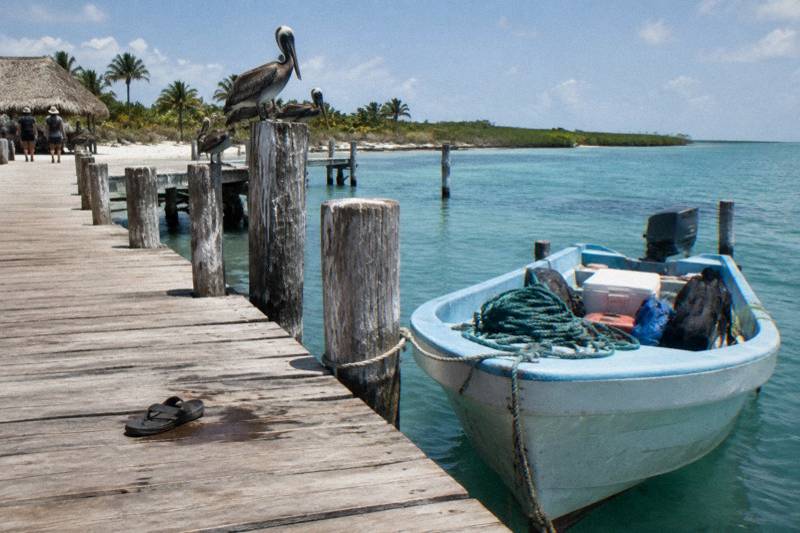
Can You Swim In Sian Ka'an?
Where swimming is allowed in Sian Ka'an: the Muyil canal float, reef snorkel stops on boat trips, the rules on sunscreen and vests, and which tours include the most water time.
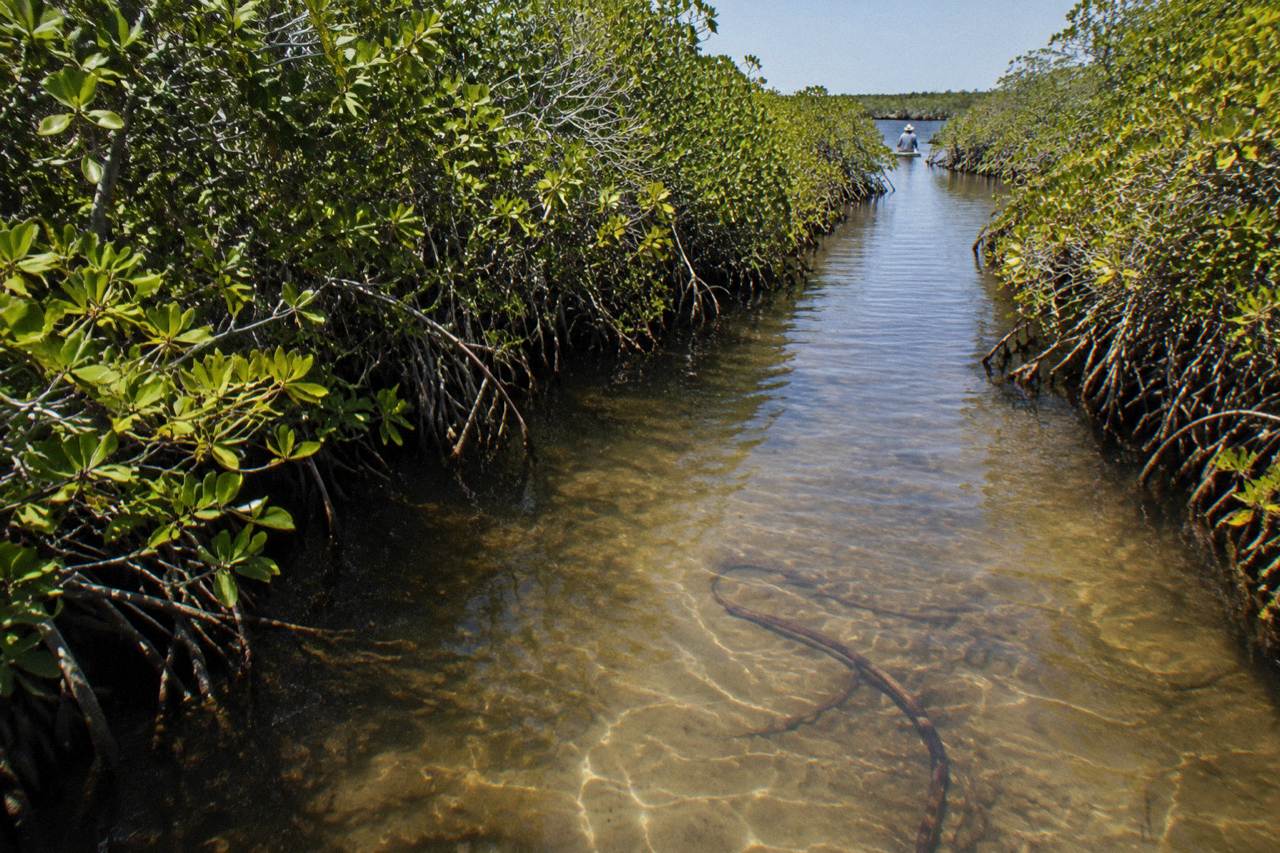
The short answer is yes, and the more useful answer is that Sian Ka'an is not a swimming beach destination, it is a swimming-in-specific-places destination. The water happens in three forms here: a slow, warm drift down hand-dug Mayan canals behind the Muyil ruins, lagoon shorelines reached by boat, and short reef snorkel stops on the Punta Allen day trips. Every one of those comes with rules the biosphere enforces, from mandatory life vests to a blanket ban on sunscreen in the water, and every one depends on conditions, because this is a protected reserve and not a chlorinated pool. Once you know where the water actually is, our ranked guide to Sian Ka'an day trips from Tulum lays out the boat, ruins, and kayak options along with what each costs.
This matters commercially as much as ecologically. Swim stops are a core reason people book a boat trip rather than drive to a viewpoint, and the tours that get you into the water, the full-day Punta Allen adventure, the ancient Maya canals float, the half-day snorkel and lunch trip, are the ones this article follows closely. The reserve itself is the subject of Sian Ka'an Reserve, and this page answers the swimming question in full.
Is Swimming Allowed In Sian Ka'an?
Yes, swimming is allowed in Sian Ka'an at defined spots: the ancient Mayan canals at Muyil, the lagoons reached by boat, and reef snorkel stops offered on boat tours, which the listings describe as dependent on sea conditions. Swimming is not a free-range activity here, the reserve is a federally protected biosphere, and access runs through authorized points and licensed operators.
That last clause is the one independent travelers trip over. The National Commission of Natural Protected Areas (CONANP) manages access through authorized entry points such as Muyil and the Punta Allen route, and organized tours are the standard way visitors reach the water. If you are weighing a self-guided day against a booked one, the piece on visiting Sian Ka'an without a tour covers what is realistic and what is not.
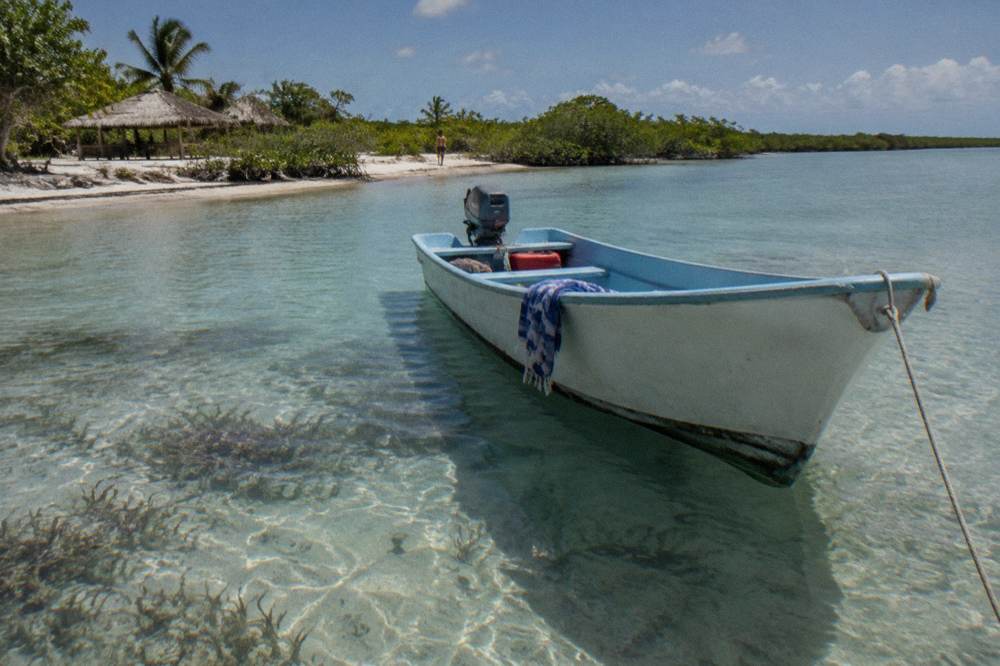
The three swim experiences are genuinely different from each other. The canal float is calm, warm freshwater moving barely at all, a contemplative drift that the operator's own page describes as roughly 950 meters and 30 to 45 minutes of floating. Lagoon swimming is shallow and still, over sediment and mangrove roots rather than sand. The reef snorkel is the only place with coral and fish, and it is the most condition-dependent of the three, because wind, waves and sargassum can close the window on any given day.
Here is the shape of the water options at a glance:
| Swim experience | Where it happens | How you get there | What it feels like |
|---|---|---|---|
| Canal float | Ancient Mayan canals behind Muyil ruins | Boat from Muyil lagoon, then float back | Warm, slow, shallow drift, life vest required |
| Lagoon swim | Muyil and Chunyaxche lagoon edges | Boat tour or kayak tour | Still, shallow, mangrove shoreline |
| Reef snorkel | Mesoamerican Reef stops on the boat route | Punta Allen day trips by boat | Open water over coral, vest mandatory, sea conditions decide |
If maximizing water time is the goal, the three listings below are the natural shortlist: the Punta Allen full day with its reef stop and lunch, the community-run canals tour built around the float, and the half-day trip that packs a snorkel stop and lunch into six hours.
Where Swimming Is Allowed In The Biosphere
Swimming is allowed at the Muyil canals and lagoon system, at lagoon and natural pool stops on licensed boat routes toward Punta Allen, and at reef snorkel stops the operator selects. It is not allowed as free access anywhere else: access runs through authorized entry points, and entry runs through CONANP checkpoints and authorized community cooperatives.
The geography explains the restrictions. Sian Ka'an covers 528,148 hectares of marine, coastal and terrestrial territory with about 120 km of coastline, and the three core zones, Muyil, Cayo Culebras and Uaimil, are conservation areas first and recreation areas second. CONANP's official page for the reserve states that transport inside is by private or rented car or authorized operators only, and that access is limited to authorized points. In practice that means the swimming you do here comes attached to either a cooperative boat, a licensed tour operator, or your own kayak under a federal permit.
The Muyil side is the easiest swim to reach. Tulum sits 23 km from the Caseta Muyil checkpoint, the archaeological zone sits just off Federal Highway 307, and a boardwalk trail runs from the ruins out through the forest to the lagoon dock where the cooperative boats launch. On the Punta Allen side, the water arrives to you by boat: lagoon systems, a natural pool stop several tours describe, and the reef line beyond.
What you should not expect is a lifeguarded beach experience. None of the listings describe beaches in the swim-program sense, and the Atlantic-facing coast here is unguarded and often rough. The swimming that the reserve actually offers is boat-mediated, vest-on, guide-present, and better for it.
The Muyil Canal Float, The Reserve's Signature Swim
The canal float is the swim Sian Ka'an is known for: a boat ride across Muyil lagoon to the mouth of an ancient hand-dug canal, then a slow drift of roughly 950 meters, about 30 to 45 minutes of floating, wearing a life vest in warm, shallow, clear water between mangrove walls. The operator's page describes it as a contemplative float, and that is accurate. If you're weighing this slow drift against a day in a freshwater cenote instead, our cenotes versus Sian Ka'an comparison breaks down cost, effort, and wildlife for both.
The canals are Maya engineering. They were dug to move goods between the lagoon system and trade routes inland, and they still hold water and still work as corridors, which is why the float exists at all. The water is tannin-stained from the mangroves, warm, and shallow enough that the vest is as much about drifting correctly as about safety. Operators provide the vests, and life vests are provided and required for the float, and the local cooperative at the dock supplies them before you get in the water, so you float on your back and let the barely-there current carry you.
The float is sold several ways across the tours on this site. The community cooperative's eight-hour ancient Maya canals tour, from $162 per person with a 4.8 rating from 611 reviews, builds a full day around it with a traditional Mayan breakfast and a certified local guide. Mexico Kan Tours runs two versions: the Muyil ruins and lazy river trip from $219 per person, 4.8 from 439 reviews, with entry fees and a certified guide included, and a guided ruins-and-float combination from $219 per person, 4.9 from 846 reviews, with hotel pickup in Tulum. There is even a float-only option, Tulum Diving and Travel's three-to-five-hour canal float from $170 per person, 4.7 from 49 reviews, with national park fees and the reef tax included but lunch excluded. If you're still weighing whether the ruins justify the trip on their own, our detailed verdict on whether Muyil deserves your time covers entry fees, current hours, and what the recent reopening means for visitors.
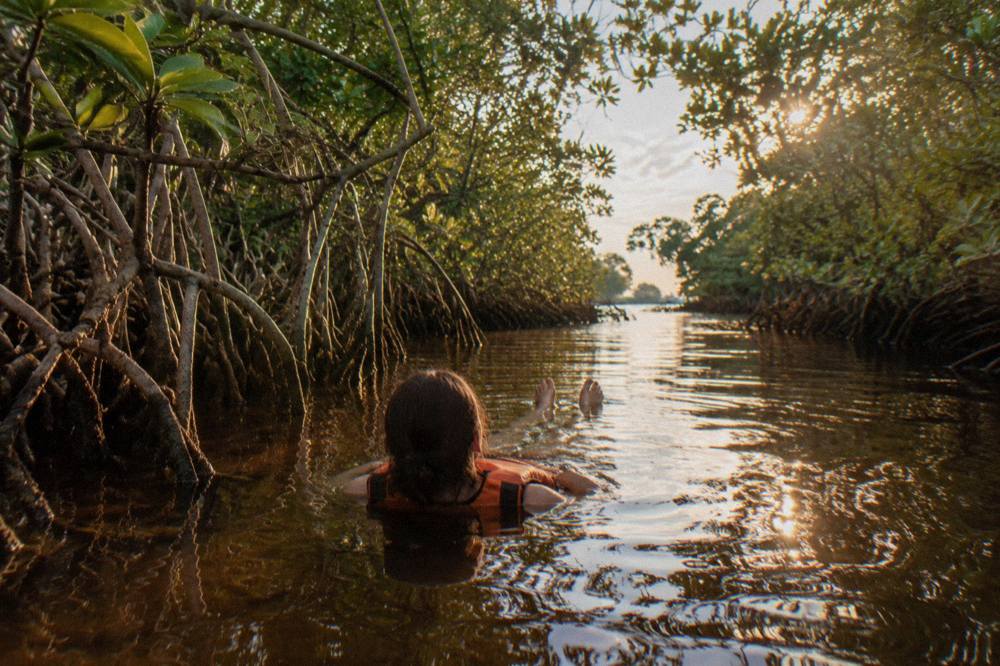
If the float is what brought you here, the standalone guide to the Muyil floating canals goes deeper on the route and the operators, and the question of whether there is a lazy river near Tulum has the same answer: this canal is the closest thing the Riviera Maya has to one, and it predates every resort version by well over a thousand years.
Two practical notes shape the day. The Muyil archaeological zone charges its own INAH admission, MXN 80 for nationals and foreign residents and MXN 145 for foreign visitors, and it is open daily 8:00 to 17:00 with last entry at 16:30, per the INAH listing. The reserve's own federal fee is separate and larger, and Tours differ on this: the cooperative's listing states the MXN 225 CONANP fee is excluded and payable separately, while the Mexico Kan lazy river listing states entry fees are included. Read the inclusions line before you assume anything.
Snorkeling On The Reef: What Tours Actually Offer
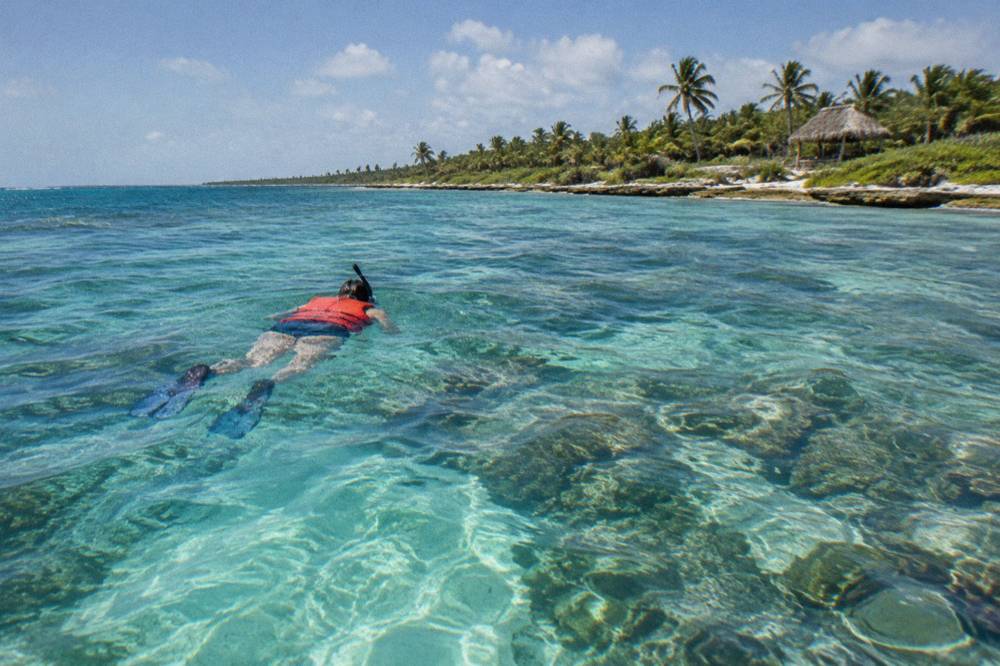
Reef snorkeling in Sian Ka'an happens as a stop on boat tours, typically 20 to 45 minutes in the water over the Mesoamerican Reef, with mask, fins and a mandatory life vest provided, and only when sea conditions allow. Listings describe dolphin, turtle and bird viewing from the boat; no operator can promise a particular animal or a particular visibility on a given day.
The Punta Allen day trips are the snorkel carriers. The featured full-day adventure from Mexico Kan Tours, from $254 per person and rated 4.9 across 1,227 reviews, is the most-reviewed listing among the site's tours. It includes the boat with snorkeling equipment, fruit, water, snacks, lunch and hotel pickup in Tulum. The half-day version from the same operator, from $204 per person with a 4.9 from 270 reviews, explicitly lists a boat with snorkeling equipment and a life vest described as mandatory, plus lunch. From the Riviera Maya side, Del Mundo Tours runs a 10-hour full day from $235 per person, 4.9 from 28 reviews, with snorkel equipment and both a snack and lunch included.
The listing language on wildlife is careful, and you should read it the same way. Boats describe viewing dolphins, turtles, crocodiles and birds, and operator descriptions give a roughly 3-hour boat segment with a 20-minute reef snorkel and a natural pool swim. What no listing promises, and no honest article should, is a sighting. These are wild animals in a reserve of 528,148 hectares, and the rules are strict: no touching, chasing or feeding wildlife, no touching coral, and observation from a distance.
For a fuller comparison of the boat options, including the small-group and private variants, the best Sian Ka'an tours guide compares every tour on this site side by side, and the snorkeling-specific page covers the reef stops in more detail. The short version for swimmers: the half day is the efficient snorkel-and-lunch choice, the full day buys more water and more coastline.
Sunscreen, Vests And The Rules That Shape A Swim
The rules that matter for swimmers: life vests are mandatory on boat tours and for the canal float, sunscreen of any kind is not permitted in the reserve's waters, and there is no touching of coral, plants or wildlife. The visitor rules as reported list no sunscreen among permitted items, and the phrase reef-safe has no legal meaning in Mexico, so the working guidance is shade, a rash guard, a hat, and nothing on your skin in the water.
The sunscreen point catches almost everyone. The CONANP visitor rules for the reserve, as reported by secondary sources that read the official page, list no sunscreen among the prohibitions, without a reef-safe exception, and one tour review echoes it plainly: sunscreen is not allowed to be used inside the reserve. The practical translation is a swim shirt. A rash guard blocks sun as well as lotion does, does not wash off into a lagoon, and matches what the tour operators themselves recommend for the canals.
Vests are the other constant. The half-day listing states the life vest is mandatory; the private full-day listing states vest use is mandatory on all boat tours and that the operator provides them; the canal float operators provide them and require them. This is not negotiable and not a comment on your swimming, it is how a biosphere keeps every visit standardized and safe in open water and shallow canals alike.
The remaining rules are the obvious conservation set: no fishing outside designated catch-and-release subzones, no collecting plants or animals, no drones, no pets at the archaeological zones, no feeding anything. Licensed guides accompany tours in part to keep those rules followed. If your instinct is that this sounds restrictive, reframe it: the reason the water is worth getting into is that vast acreage of it has been treated this way since 1986.
Fees You Pay To Swim In Sian Ka'an
A swim day in Sian Ka'an carries two possible government fees on top of the tour price: the CONANP reserve entry fee of MXN 225 per person per day, and the INAH admission at Muyil of MXN 80 for nationals and foreign residents or MXN 145 for foreign visitors. Some tour listings include these fees, some exclude them, and the inclusions line on each listing is the deciding document.
This is where reading the fine print saves real money. Among the tours on this site, the Mexico Kan lazy river listing states entry fees are included, the Tulum Diving and Travel canal float covers all taxes, fees and handling charges plus national park fees, and the cooperative's canals tour does not include the MXN 225 CONANP fee, which is payable in person. The same split runs through the birdwatching and kayak listings, several of which exclude the MXN 225 explicitly.
| Fee | Amount | Who collects it | Typical tour treatment |
|---|---|---|---|
| Reserve entry | MXN 225 per person per day | CONANP at Caseta Muyil or Caseta Arco Maya | Included in some listings, excluded in others, read the line |
| Muyil archaeological zone | MXN 80 nationals and residents, MXN 145 foreign visitors | INAH at the site | Included on some ruins-and-float listings |
| Exemptions | Under 12, seniors, pensioners, disabled persons with credential; 50% for students and teachers with credential | CONANP | Bring the credential if you qualify |
The reserve is open daily 7:00 to 18:00, and the bracelet you get at the checkpoint is your proof of payment for the day. Children under 12 enter the reserve free with credential, and students and teachers get 50 percent off with theirs. None of this is negotiable at the booth, and none of it appears in the tour price unless the listing says so.
Sargassum, Seasons And When The Water Feels Best
Sargassum season on this coast runs about May to October with a June and July peak, and 2026 has been an unusually heavy year with early arrivals from January; the rainy season is May to October, the dry season November to April, and hurricane season runs 1 June to 30 November. None of this predicts a specific beach on a specific day, and the reef snorkel stop always depends on the sea you actually meet.
Sargassum is the variable swimmers ask about most, and the honest framing is qualitative. The seaweed arrives on the windward coast, and boat captains move snorkel stops or shorten them based on what the water is doing that morning.
Temperature is rarely the problem. A climate dataset puts the sea around Tulum between 26 and 29 C across the year, warm enough that wetsuits never appear on any listing. The dry season, November to April, brings lower rain and lower mosquito pressure, and a climate summary puts annual rainfall at 1,120 mm across 81 rain days, concentrated in the May-to-October wet months. None of the official sources tie wildlife sightings to months, and this site does not either, with the single exception of the operator-guide view that birding is best November to March, which is about binoculars, not swimming.
The one logistics fact that feeds into swim planning is the Punta Allen road, about 46 to 50 km of dirt from the Arco Maya checkpoint, currently a 3 to 4 hour drive with rehabilitation about 80 percent complete, and most rental agencies prohibit their cars on it. That is the practical argument for the boat tours: their vans handle the dirt road for you, about 1.5 hours from the reserve entry to the boat.
Which Tour To Book For The Most Water Time
For the most swimming in one day, the full-day Punta Allen boat trip, from $254 per person, is the strongest choice, combining a reef snorkel stop and wildlife viewing by boat over 10 hours with lunch and Tulum pickup. For the calmest water, the cooperative canals tour from $162 per person centers the float; for a shorter day, the half day from $204 per person delivers a snorkel stop and lunch in 6 hours.
The trade-offs are simple. The full day maximizes total time on and in the water but commits your whole day, hotel pickup in Tulum and a 10-hour arc with lunch in Punta Allen village. The canals tour is the cultural-and-water hybrid, Mayan breakfast, community cooperative guides, and an inland canal float less exposed to wind than trips out on the open sea. The half day is the compromise for travelers with afternoon plans or a short attention span for boats.
Two further options deserve a sentence each for swimmers with specific interests. The sunset kayak, from $120 per person with a 5.0 from 316 reviews, puts you inches above the lagoon rather than in it, yet it remains the quietest water experience among the tours on this site. And the small-group lagoons trip from Agua Clara, from $195 per person, 4.7 from 21 reviews with a group max of 6, includes snorkel gear for its lagoon day; the route includes a cenote swim stop, and snorkel gear is included, a reminder that not every swim in this region happens in the biosphere itself.
Every tour on this site carries free cancellation as stated, which matters when the sea, not the calendar, decides your snorkel stop. Book the water day you want, check the inclusions line for the MXN 225 fee, pack a rash guard instead of a sunscreen bottle, and let the reserve show you whichever version of swimmable it is offering that day.
Common Questions About Swimming In Sian Ka'an
Can You Swim In Sian Ka'an?
Yes. Swimming is allowed at defined spots: the ancient Mayan canals at Muyil, lagoon and natural pool stops on licensed boat routes, and reef snorkel stops on the Punta Allen day trips, subject to sea conditions. It always comes with a life vest, no sunscreen, and a licensed operator or cooperative.
Is The Canal Float Safe For Weak Swimmers?
Yes, by design. The float is in shallow, barely moving water and a life vest is provided and required, so you drift rather than swim. The listing describes it as a contemplative float of roughly 950 meters taking 30 to 45 minutes.
Can I Wear Reef-Safe Sunscreen In The Reserve?
No. The visitor rules as reported list no sunscreen of any kind, and reef-safe has no legal meaning in Mexico. Use a rash guard, a hat and shade instead, which is also what the operators recommend for the canals.
Is Snorkeling Guaranteed On The Boat Tours?
The boat trip is guaranteed, the snorkel stop is not. Listings describe reef stops of roughly 20 to 45 minutes that depend on sea conditions, including wind and sargassum, and captains adjust or move stops on the day.
Do I Need To Pay The Reserve Fee Separately From My Tour?
It depends on the listing. The CONANP fee is MXN 225 per person per day; some tours state it is included, others state it is excluded and payable at the checkpoint, where you receive a paper bracelet. Check the inclusions line before booking.
When Is The Water Clearest For Swimming?
No source promises clarity by month. Sargassum season runs about May to October with a June and July peak, and 2026 has been unusually heavy; the canal float is largely unaffected, while reef stops depend on the day's conditions.