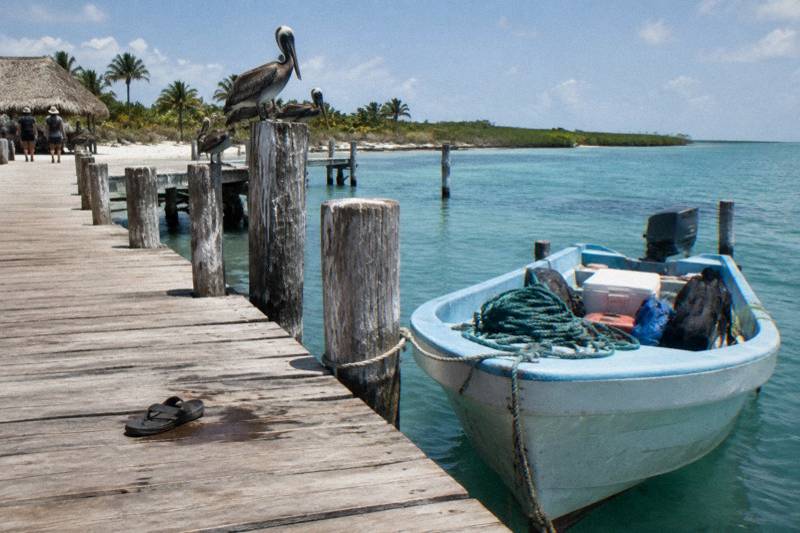
Is Punta Allen Safe?
A safety-focused look at Punta Allen in Sian Ka'an: the road, the village, hurricane season, limited services, and the tours that handle the logistics for you.
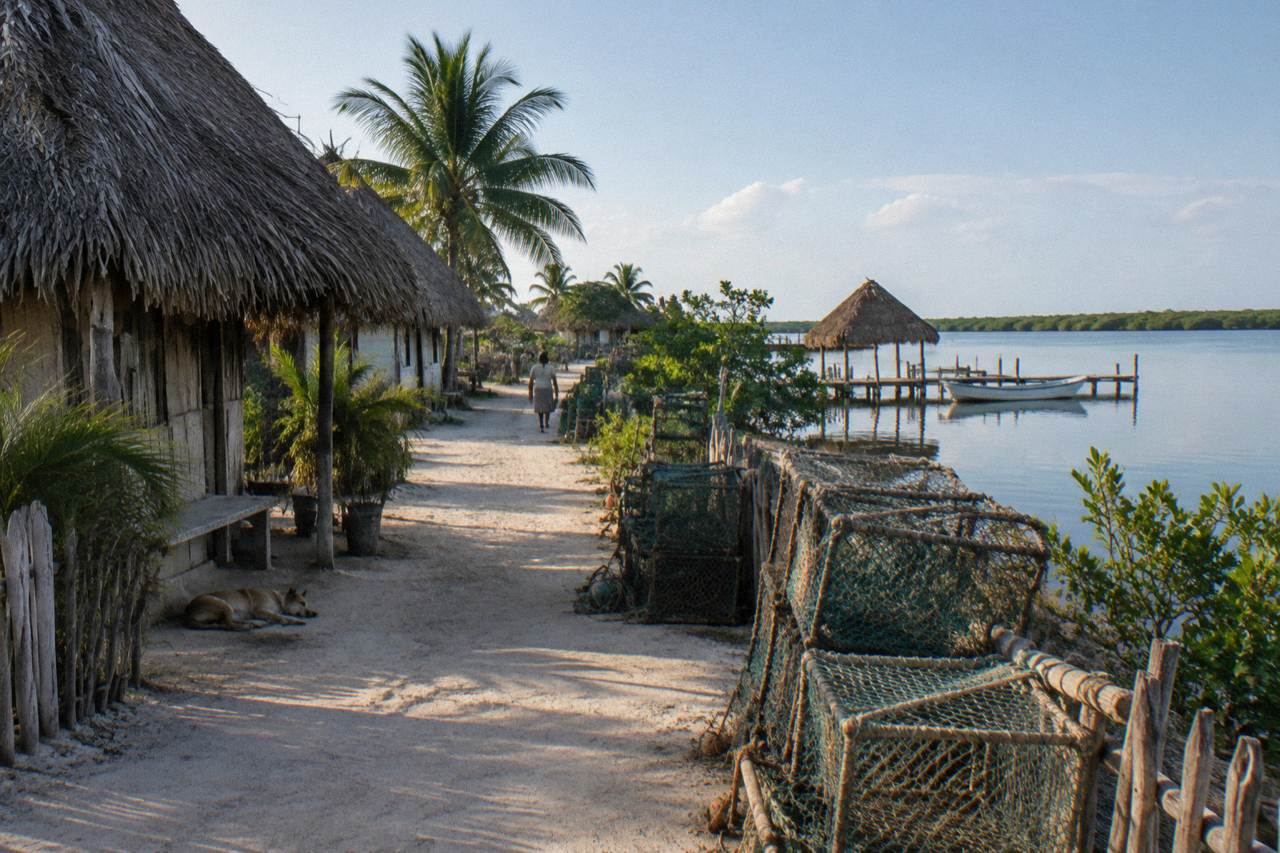
How Safe Is The Road To Punta Allen?
Yes, in the way most small fishing villages are safe: the realistic risks in Punta Allen are the road in, the weather above it, and the scarcity of services once you are there, not crime against visitors. No official source publishes crime statistics for the village, and none is cited here. The drive is the part that deserves your attention, roughly 46 to 50 km of unpaved track that most rental agreements prohibit.
Punta Allen sits on a narrow spit of land inside the Sian Ka'an Biosphere Reserve, at the end of the only road down the coast from Tulum. It is the base for the full-day Punta Allen boat trips that make up the heart of this reserve's tour offering, trips like the featured Punta Allen adventure from Tulum, so the safety question matters to a lot of people standing at a booking page. The worry is reasonable, but it usually attaches to the wrong thing. The village itself is small, built around fishing and small-scale ecotourism. The hazard is getting there in a rental car you are not supposed to drive on that road. Once the drive is behind you, a ranked guide to the best activities in Sian Ka'an helps you figure out what the day itself should include.
Punta Allen publishes no crime figures, so judge by the road, the sea and the operator. The road condition is documented in local reporting through October 2026. Hurricane season dates come from the National Hurricane Center. Gas availability in the village is genuinely unknown, nothing published answers it, so confirm locally before you go. Cartel rumors and crime claims circulate about this coast, but no published source backs them either way, and repeating one would only turn a guess into a fact.
The practical answer for most travelers is simple. Take a tour. Operators like Mexico Kan Tours and Pixan Riviera run the Punta Allen route with their own drivers, people who know the road, boats with licensed guides, and lunches arranged in the village. That converts the riskiest part of the day, the drive, into somebody else's professional routine.
What Is The Punta Allen Road Actually Like Right Now?
As of 9 October 2026 the rehabilitation of the Punta Allen road was about 80 percent complete, with roughly 16 km rehabilitated and 5 to 6 km remaining before the village. Driving time currently runs 3 to 4 hours from the checkpoint, and the state projects 40 to 45 minutes once the work finishes. Most rental car agreements still prohibit the road outright.
The road is the single biggest factor in any honest safety answer, so it deserves specifics. It is an unpaved dirt track inside the reserve, running from the Caseta Arco Maya checkpoint south toward the village. The CONANP official page for the reserve puts the distance at 50 km of dirt road; 2026 reporting describes about 46 km of roadway. Both numbers describe the same corrugated reality: sand, potholes, and standing water, in changing proportions depending on the rains.
The rehabilitation story through 2026 has been genuinely encouraging. Work resumed in June 2026 on a 20 km phase, and by 9 October the project had filled, stabilized and compacted about 16 km with cementing material, per Riviera Maya News. Plans reported that same month included further work on the stretch between the reserve arch and the Boca Paila bridge. No closure or repair of the Boca Paila bridge itself has been reported, so there is nothing to plan around either way.
Contrast that with January 2026, when local outlet Sol Quintana Roo reported that deterioration had stretched the drive from the arch to the village to as much as six hours, and that some delivery suppliers had suspended service because their vehicles were being damaged. That is the road's bad-mode baseline: passable, slow, and hard on ordinary cars.
What this means practically: if the work completes as projected, Punta Allen becomes a 40 to 45 minute drive and the whole risk calculus changes. Until then, treat the 3 to 4 hour figure as the planning number, and treat the rental-car prohibition as the decisive fact it is. A Tulum Times road guide, updated in September 2026, advises independent drivers to use a 4x4 and budget at least 2.5 hours from the Tulum hotel zone even in typical conditions.
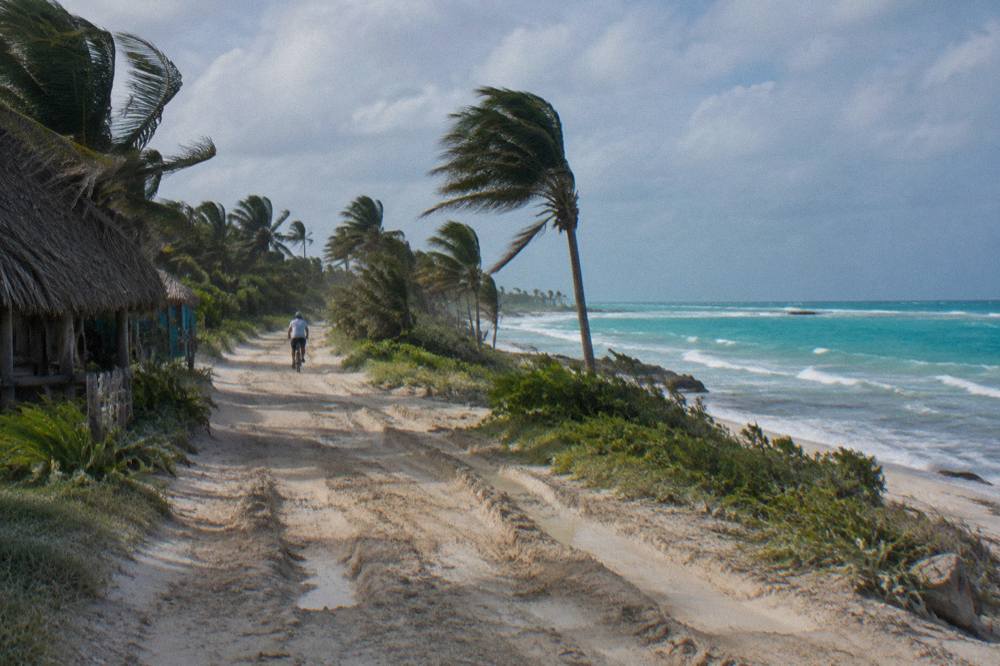
Do The Punta Allen Tours Handle The Drive Safely?
Yes, and that is the main safety argument for booking one. The full-day Punta Allen boat trip from Mexico Kan Tours, from $254 per person and rated 4.9 from 1,227 reviews, includes hotel pickup in Tulum, a local guide, a boat with snorkeling equipment, lunch, and free cancellation is listed. The driver who runs the road daily is the mitigation.
The Punta Allen trips run the road in the operator's own van with its own driver, on a stretch that can be bumpy, which is why the rental prohibition never becomes the traveler's problem. The featured trip, the full-day adventure to Punta Allen, is the most reviewed of the tours on this site: 4.9 from 1,227 reviews. It runs about 10 hours, caps groups at 12, and lists hotel pickup and drop-off in Tulum, fruit, water, snacks and lunch, a boat with snorkeling equipment, and a local guide. Extra pickup zones north of Tulum carry per-person surcharges from $10 up to $45 for the Cancun downtown area, as the listing states.
The budget-conscious alternative is the dolphins and turtles day trip from Pixan Riviera, from $179 per person, about 10 hours, rated 4.8 from 48 reviews, with transport from Playa del Carmen and Tulum, a certified guide in French, English or Spanish, a cookie-and-juice snack, water and beers, and the boat ride. Note what the listing promises and does not: dolphins and turtles are wildlife, and no honest page guarantees a sighting. The listing describes them as the trip's focus, which is exactly how it should be read.
For travelers who want the day entirely to themselves, the private Sian Ka'an adventure from Mexico Kan Tours runs the same full-day format privately, from $619 per person, with mandatory life vests, snorkeling equipment, fruit, water, snacks, hotel pickup in Tulum and a local guide. Private here means the vehicle and boat, not a different road, so the safety profile of the drive is identical.
The comparison in one table:
| Tour | Price (from, per person) | Rating | Duration | The drive |
|---|---|---|---|---|
| Full Day Trip to Punta Allen (Mexico Kan Tours) | $254 | 4.9 from 1,227 reviews | 10 hours | Operator vehicle, Tulum pickup |
| Dolphins & Turtles Day Trip (Pixan Riviera) | $179 | 4.8 from 48 reviews | 10 hours | Operator vehicle, Playa del Carmen or Tulum |
| Private Sian Ka'an Adventure (Mexico Kan Tours) | $619 | 4.9 from 48 reviews | 10 hours | Private operator vehicle, Tulum pickup |
Is Hurricane Season A Reason To Avoid Punta Allen?
Hurricane season in the Atlantic runs 1 June to 30 November, and the risk in Quintana Roo is higher from August to October. In 2026 the season has so far been below normal, with eight named storms and none reaching hurricane strength through early October. A tour with free cancellation listed, which all the Punta Allen trips here have, is the sane way to book inside those months.
The date range is official: the National Hurricane Center defines the Atlantic season as 1 June to 30 November, per the NHC climate page. The 2026 detail comes from Riviera Maya News, which reported in early October that the basin had recorded eight named storms, Arthur through Hanna, with none reaching hurricane strength, against a NOAA outlook of 7 to 13 named storms.
Two honest caveats belong next to that. First, a quiet season to date is not a promise about November. Second, and more specific to this coast, the rainy season runs May to October and heavy rain is exactly what degrades an unpaved road, which is how a 3 hour drive became a 6 hour drive in January 2026 after bad conditions. The road risk and the weather risk compound each other. Free cancellation lets you move a booking if the forecast turns, and the listings note that snorkel stops are always subject to weather on every Punta Allen trip listed here.
The village itself, it should be said, has lived with this weather for as long as it has existed. The question for a visitor is not whether Punta Allen can survive a hurricane season, it is whether your one chosen day should be a dirt-road day in a downpour. It should not.
How Limited Are Services In The Village?
Honestly limited, and partly unknown. Punta Allen has a small year-round population, restaurants tied to the tour trade, and no clear answer on fuel; gas availability there is not published, so confirm locally before making the drive. Bring cash, water and what you need for the day.
The reserve's official access page is blunt about the whole area: transport is by private or rented car or authorized operators, entry is limited to authorized points, and access is managed by CONANP at the checkpoints. That structure, official entry at Caseta Arco Maya, a paper bracelet as proof of payment, the reserve open 7:00 to 18:00, means the village sits at the end of a managed corridor, not on a service highway. The entry fee is MXN 225 per person per day, and some tours include it, like the dolphins and turtles trip, while the Mexico Kan Punta Allen full day does not list it at all, so read the fee line, so read the listing's own fee line.
What the reporting of early 2026 showed is how thin the supply line is: when the road deteriorated, bottled water and gas distributors reportedly suspended or reduced deliveries because vehicles were taking damage. That was a road problem, not a village problem, and it is the clearest illustration of why the road work matters to the people who live there as much as to visitors. The October 2026 reports cover rehabilitation progress on the access road, not supply conditions, so they say nothing about a current shortage in Punta Allen.
The planning rule that follows is uncontroversial. Assume nothing is available at the far end that you did not bring or that your tour did not arrange. The full-day tours arrange lunch in the village, which is a solved problem on a booked day. An independent day trip is a different proposition, and it is covered in our guide to visiting without a tour.
What About Crime, Cartels And All The Things People Ask About?
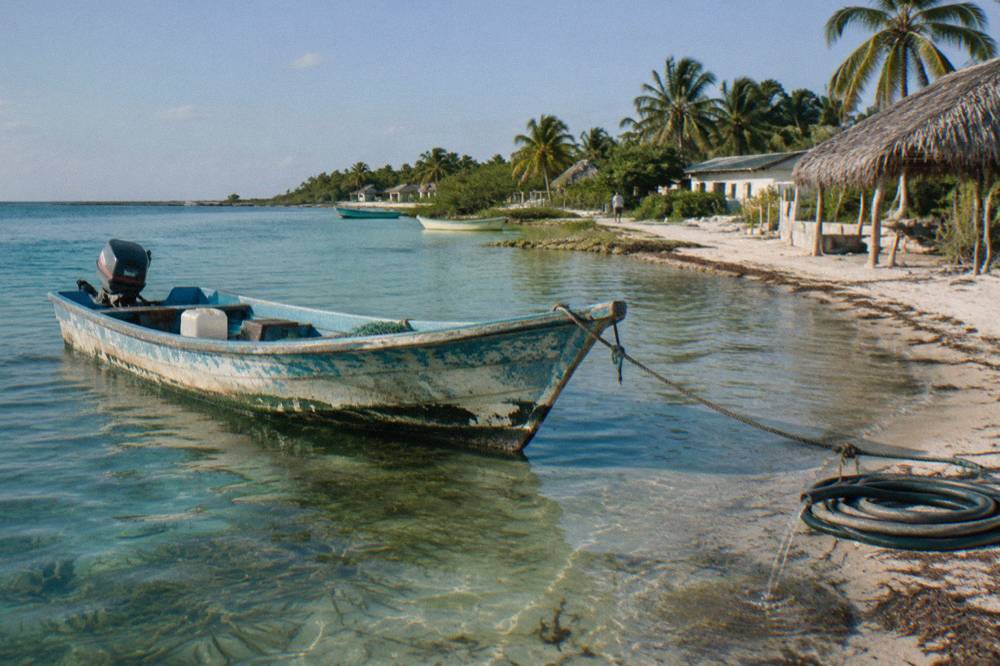
No official crime statistics are published for Punta Allen, and there is no reliable public reporting on cartel activity in the village, so no one can say either way. What the sources do describe is a small community whose economy is lobster fishing and licensed ecotourism, inside a strictly managed biosphere reserve with checkpoint-controlled access.
Plenty of travel content glosses over this, so it helps to be precise. A page that says "Punta Allen is totally safe from crime" and one that says "cartels operate there" would both be inventing, because neither claim has evidence behind it. In plain terms: the village sits inside a vast UNESCO-inscribed biosphere reserve, access is limited to authorized points, licensed local guides are the norm on the water, and the economic life of the place depends on tourists having a calm day. None of that is a crime statistic, and none of it should be dressed up as one.
There are real conduct rules, though, and they are documented. Visitors may not feed, touch, chase or harass wildlife; observation from a distance is required. The CONANP visitor rules as reported prohibit pets, sound equipment, campfires, fishing without authorization, collecting plants or animals, and unauthorized trails. Drones are prohibited in protected natural areas, and separately over archaeological zones. And on sunscreen: the CONANP visitor rules as reported list no sunscreen of any kind, and "reef-safe" has no legal meaning in Mexico, so the guidance is shade, a rash guard, a hat and no sunscreen at all inside the reserve. Our what to bring guide builds a packing list around exactly these rules.
The reserve fee, hours and access details are on the official CONANP page, which is the authority behind the bracelet you will be wearing by the time you reach the water.
Should You Drive Yourself Or Take A Tour?
Take a tour unless you have a 4x4, full insurance clarity, and a tolerance for a 3 to 4 hour unpaved drive each way. Most rental agreements prohibit the Punta Allen road, the village has no documented fuel availability, and the operators run the route daily with drivers, boats, permits and lunches already arranged. The tour is not a luxury here, it is the infrastructure.
Consider the arithmetic of the independent day. From Tulum you reach the Caseta Arco Maya checkpoint, pay MXN 225 per person for the bracelet, then commit to several hours of unpaved driving, in a car your rental agreement says cannot go there, to a village where fuel availability is undocumented, for a day that ends with the same drive back in the dark if you misjudge it. Some people do it, and the road rehabilitation may soon make it ordinary. In late 2026 it is still an expedition, and it should be planned as one.
The booked day inverts every one of those risks. Pickup at your Tulum hotel, the operator's driver on the Punta Allen road, a licensed guide on the boat, lunch in the village, and a free-cancellation policy on every Punta Allen tour on this site. If your instinct is that this sounds expensive, the range is real but not extreme: Punta Allen boat days run from $179 per person on the dolphins and turtles trip to $254 on the featured full day, with the private version at from $619 per person. Our broader Punta Allen full-day guide walks through the whole comparison.
For a different balance altogether, the half-day discovering tour from Mexico Kan Tours, from $204 per person, 4.9 from 270 reviews, delivers the boat, snorkeling equipment, life vests, lunch and Tulum pickup in six hours, without the long run south. It trades Punta Allen itself for time, which for some travelers is the safer and saner choice, and it is covered in the best tours roundup.
A Season-By-Season Safety View
The dry season, November to April, is the low-complication window: less rain, less road degradation, and outside hurricane season. The operator-guide view is that birding is best November to March. No official month-by-month wildlife calendar exists for the reserve, so treat any operator timing you come across as a guide view only.
A climate dataset puts Tulum's rainy season at May to October and the dry season at November to April, with about 1,120 mm of rain falling over roughly 81 rain days a year and sea temperatures of 26 to 29 C. None of that is dramatic, but the rain statistic matters more here than it would on a paved coastline, because rain plus dirt equals the conditions that turned the January 2026 drive into a six-hour run. Sargassum season in the Mexican Caribbean runs about May to October with a June and July peak, and 2026 has been an unusually heavy year with early arrivals, though no page can promise you a clear or a weedy day, and this one will not try.
| Period | Road and weather picture | What it means for Punta Allen |
|---|---|---|
| November to April (dry) | Outside hurricane season, least rain | The low-complication window for any visit |
| May to July | Rainy season begins, sargassum peak June and July | Boat days usually fine, check the listing's cancellation terms |
| August to October | Higher hurricane risk, heaviest rain months | Best booked with free cancellation, which every Punta Allen trip on this site offers |
The village does not close for the low season; the reserve is open daily 7:00 to 18:00 year round, and CONANP's own guidance is simply that the area is recommended all year. What changes across the year is your margin for error on the road, and that margin is the through-line of every honest answer on this page.
Common Questions About Punta Allen Safety
Is Punta Allen Safe?
For most visitors, yes, with the caveat that the real risk is the road and the season rather than the village. The road is an unpaved 46 to 50 km track, currently 3 to 4 hours of driving, prohibited by most rental agreements, and about 80 percent rehabilitated as of October 2026. A booked tour with a professional driver removes the largest hazard from your day.
Can You Drive To Punta Allen In A Rental Car?
Most rental agreements prohibit the road, so check your contract before committing. The road is dirt, about 46 to 50 km from the checkpoint, with sand, potholes and standing water. Local advice for independent drivers is a 4x4 and at least 2.5 hours from the Tulum hotel zone in typical conditions. Once rehabilitation finishes, the projected drive time drops to 40 to 45 minutes, which would change this answer substantially.
Is There Gas In Punta Allen?
No reliable answer is published. Treat fuel in the village as unavailable, and confirm locally before the drive. Early 2026 reporting described suppliers suspending deliveries when the road deteriorated, but that is a historical road condition, not a current fuel status. Plan as if you cannot refuel at the far end.
When Is Hurricane Season In Punta Allen?
Atlantic hurricane season runs 1 June to 30 November, with higher risk in Quintana Roo from August to October. Every Punta Allen tour on this site includes free cancellation, which is the practical way to book inside those months. The 2026 season has been below normal so far, with eight named storms and no hurricanes through early October.
Do You Need A Tour To Visit Punta Allen Safely?
No, but a tour converts the riskiest element, the drive, into a routine handled by a driver who runs the road daily. Booked days also arrange the boat, licensed guide, lunch in the village and permits. Independent visits are possible through the authorized access points but demand a suitable vehicle, cash for fees and realistic time expectations.