What Does Sian Ka'an Mean In Mayan?
The Mayan words behind the name Sian Ka'an, where the name appears in official records, and what it covers today, from the 1986 decree to the tours that visit the places it names.
The name on the entrance bracelet is Yucatec Maya, and it is older than the reserve it labels by a very long way. What the words mean, exactly, is the part people argue about. What the name now covers, on paper, is settled: 528,147.67 hectares decreed in January 1986, inscribed by UNESCO in 1987 as a World Heritage site, and managed today as a biosphere reserve where local Mayan cooperatives run some of the boats and tours. This article works through the name itself, its official history, and the way the full-day Punta Allen boat trip, the Muyil ruins and canal float, and the small-group kayak lines all move through a landscape that carried this name long before any of them existed.
Does It Mean Origin Of The Sky?
The name is Yucatec Maya and is popularly rendered as something close to "origin of the sky" or "gift of heaven". Translations vary and no single official one is published, so the words most likely refer to sky and birth or beginning in combination. The reserve itself took the name by decree in 1986. The apostrophe in Ka'an is not punctuation for show. In Mayan writing systems it marks a glottal stop, a catch in the airflow, and it changes the word entirely. Ka'an with the stop means sky or heaven. Remove it and you have a different word altogether, which is why the spelling with the apostrophe appears on the federal decree, the UNESCO dossier and the fee schedule at the gate, always the same way.
Ask three guides and you may get three renderings, all offered with confidence. No primary source confirms this reading, no decree line and no INAH or CONANP page that fixes one translation as the correct one, so this article will not print a single certain gloss either. What can be said is that the two words together carry a sense of sky, of origin, of something given or begun from above, which is why the poetic English renderings circulate the way they do. The people who named the reserve chose Maya words deliberately, in a region where Maya is still spoken, and that choice is itself part of the story.
The name also does quiet work for travelers. It signals that this is not a beach park or a theme attraction but a federally protected biosphere, the kind of place where entry is controlled at authorized casetas, where licensed local guides are the norm, and where the sunset kayak, the birdwatching walk and the Muyil canal float are all run inside the same protected frame. When a listing says Sian Ka'an, it is claiming a place with rules, fees and a boundary, not just a pretty stretch of coast.
Meaning is only part of the story: the name now opens onto ruins, lagoons, canals and abundant birdlife.: the 10-hour boat journey down to Punta Allen, a birdwatching morning with a local specialist guide, and the Muyil archaeological visit with a boat ride and canal float, all covered below in the sections on the land itself and the tours that cross it.
How Do You Pronounce Sian Ka'an?
Say it roughly "see-ahn kah-AHN," placing the stress late in each word and adding a small catch of the breath where each apostrophe sits. That brief pause is the real trick: Ka'an should come out as two distinct syllables rather than one smooth "kaan," so the second half of the name never collapses into a single sound. The glottal stop in Ka'an is the same catch you hear in the middle of the English "uh-oh", and hearing a local guide say it once is usually enough to fix it. Sian is softer than it looks to English readers, closer to "see-ahn" than to "sigh-an", and neither word rhymes with "cyan" no matter how tempting that is.
Pronunciation matters more here than in most destinations, because the name appears on signs, bracelets, boat permits and menus all over the Riviera Maya, and the Maya language it belongs to is alive in the villages around the reserve. Community Tours Sian Ka'an, the cooperative behind the 8-hour ancient Maya canals tour, lists guides certified in Mayan culture and traditional Mayan cuisine prepared by native Mayan people among its inclusions. The name is not a relic on those tours. It is a working language, spoken by the people cooking breakfast and paddling the lagoon.
Visitors who want the deeper linguistic background can pair this question with the companion piece on Sian Ka'an Reserve itself, which covers the reserve's structure and access points, and with the guide to what the biosphere reserve south of Tulum is, which explains the protected-area category the name now rides on.
Where Does The Name First Appear Officially?
The reserve, and with it the official life of the name as a protected-area title, was decreed on 20 January 1986 in the Diario Oficial, inscribed by UNESCO in 1987, and later designated a Ramsar wetland site in November 2003, so the paper trail is precise even where the translation is not. The decree itself fixes the surface at 528,147.67 hectares and lays out three core zones, Muyil at 33,418.50 hectares, Cayo Culebras at 6,105 and Uaimil at 240,180.50, plus a buffer zone of 248,443.67. Those numbers are the name's legal body. Everything a tour visits sits somewhere inside them.
UNESCO inscription followed in 1987 under criteria (vii) and (x), which recognize both outstanding natural beauty and the habitat the reserve provides for threatened species. The Ramsar designation in 2003 added international wetland protection across an even larger 652,193 hectares, with the registry noting 320 bird species and endangered green, loggerhead, hawksbill and leatherback turtles plus the West Indian manatee. A name that began as two Maya words about the sky now anchors three overlapping layers of federal and international law.
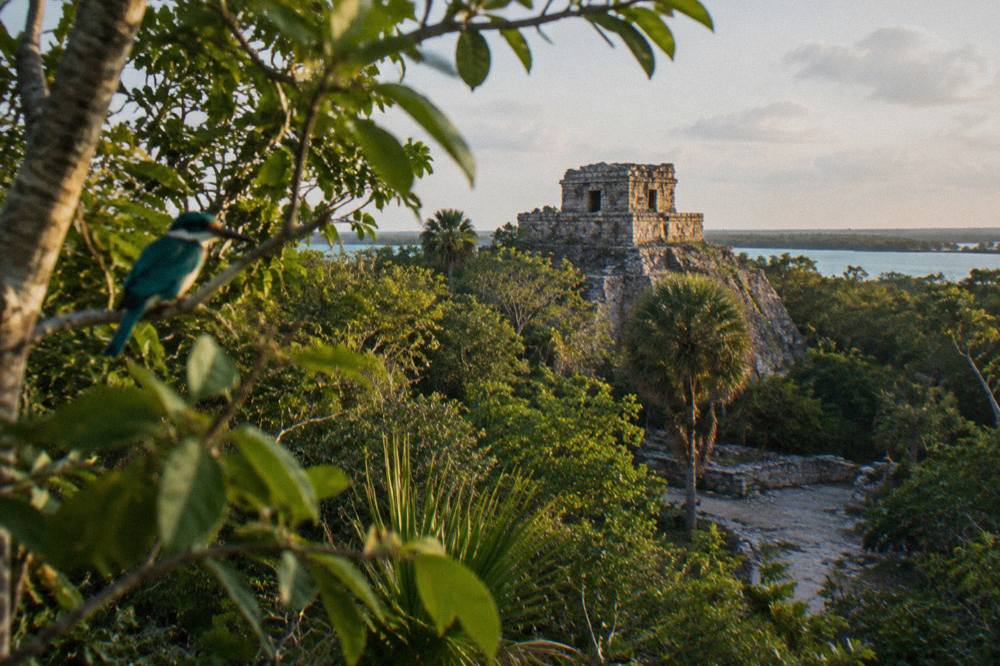
The Maya history inside the boundary is older than any of this paperwork. Muyil, one of the archaeological zones within the reserve, reopened to the public around 11 February 2026 after a closure dating to June 2024, with eleven structures worked on and a new visitor unit built. Its canals are ancient, dredged by Maya hands to move goods between the lagoon system and the sea, and today's canal float drifts down the same cleared channels. The Muyil ruins guide on this site covers the site's entry fees, hours and rules in full.
| Official step | Date | What it fixed |
|---|---|---|
| Federal decree, Diario Oficial | 20 January 1986 | Reserve created, 528,147.67 ha, three core zones named |
| UNESCO World Heritage inscription | 1987 | Site listed under criteria (vii) and (x) |
| Ramsar designation, site no. 1329 | 27 November 2003 | 652,193 ha of wetland recognized internationally |
| Muyil archaeological zone reopening | about 11 February 2026 | Site reopened after closure since June 2024, 11 structures restored |
What Land And Water Does The Name Cover?
The reserve spans 528,148 hectares in total, with roughly 120 km of Caribbean coastline, more than 400,000 hectares of land lying essentially flat at sea level, and about 120,000 hectares of marine area, a shape that explains why the same name covers ancient canals, lagoons, mangroves, jungle and reef. The official species inventory from CONANP's 2025 count lists 4,091 documented species, among them 1,015 plants, 361 fish, 373 birds, 115 mammals and 1,725 invertebrates. UNESCO's older count of 330 bird species, 219 of them breeding, is still widely quoted, and the newer CONANP figure counts 373.
The fauna list includes jaguar, puma, ocelot, tapir, the American crocodile, the West Indian manatee and four nesting sea turtle species. None of that is promised to any visitor on any day: sightings are wild animals doing wild things, and every honest listing says so. What the name guarantees is the habitat, and the habitat is enormous.
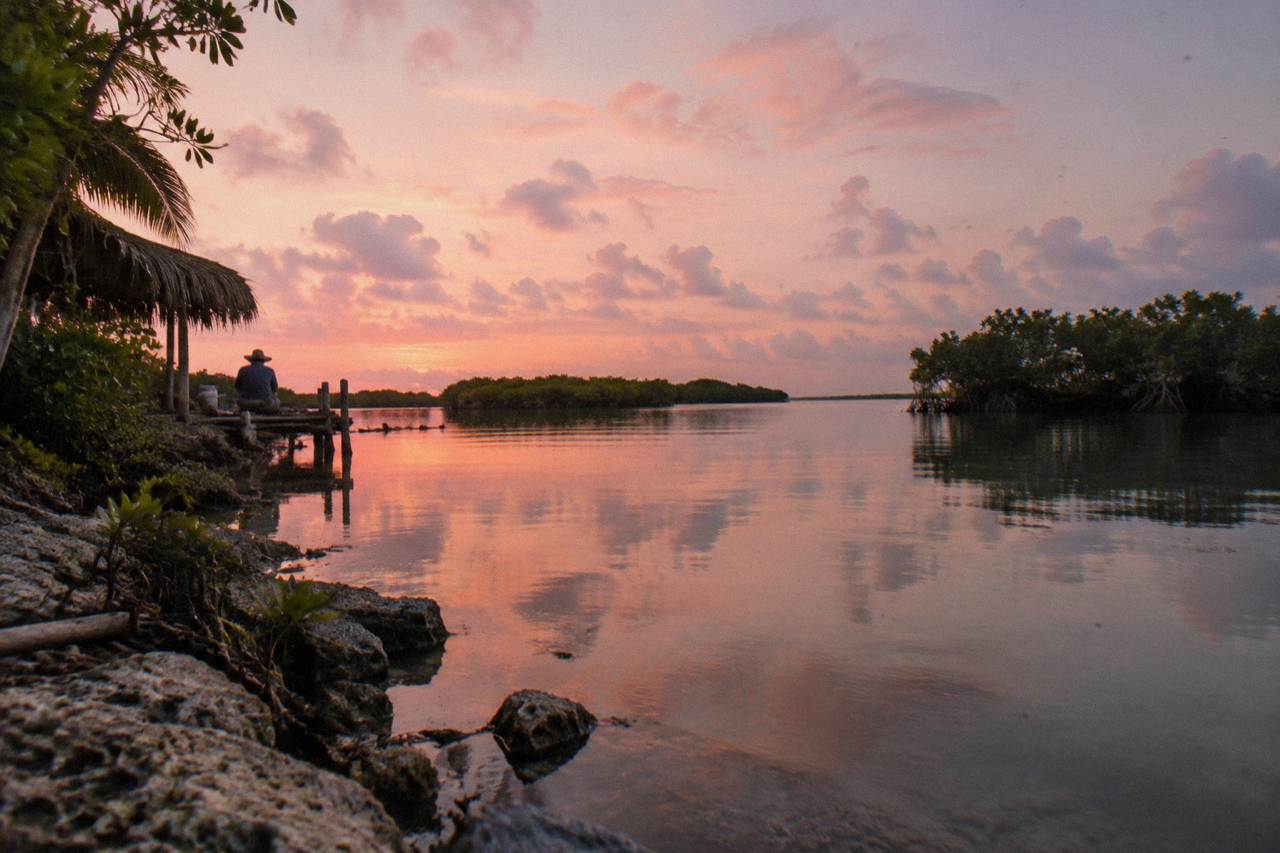
Physically, the reserve sits on limestone so flat that water does most of the traveling. Rain filters straight through the rock, lagoons sit behind narrow barriers of sand, and the ancient Maya canal system at Muyil connects the Chunyaxché lagoon to routes that once reached the sea. That hydrology is why the signature experiences are water ones: floating down a canal with the current, kayaking a lagoon at sunrise, drifting through mangroves while herons and frigatebirds move overhead.
Which Sian Ka'an Tours Visit The Places Behind The Name?
The most direct way to see what the name covers is the Muyil ruins and canal float from Tulum, the 4.5-hour cooperative kayak with Mayan breakfast and lunch, and the full-day boat trip to Punta Allen, three formats that each cross a different part of the reserve at a different speed. The full-day Punta Allen line is the site's featured pick. It runs 10 hours from Tulum, from $254 per person, and holds a 4.9 rating from 1,227 reviews, the most reviewed of the 26 tours on this site. Included are hotel pickup and drop-off in Tulum, the boat with snorkeling equipment, fruits, water, snacks and lunch. You can Check availability alongside the fuller write-up in the Punta Allen full-day trip guide.
The Muyil side answers the question with stone and water. The 6-hour Muyil archaeological site tour from Tulum, from $219 per person and rated 4.9 from 846 reviews, walks the ruins, boats the lagoon and floats the canal, with entry fees, guide, snacks and Tulum hotel pickup listed as included. The 3 to 5 hour canal float only option, from $170 per person, skips the ruins and goes straight to the water, listing national park fees, reef tax, beverages and bottled water among its inclusions while leaving lunch out. Between them they trace the same ancient canals the name's original speakers dug. Other pages covering the same trip are gathered on Sian Ka'an Reserve.
For travelers who want the name's bird life specifically, the birdwatching listings are the sharpest tool. Guided birding with Eddy runs 3 to 4 hours, group max 6, from $95 per person with a 5 rating from 140 reviews, and it is the cheapest of the tours on this site for getting into the reserve with a specialist guide. The shared-group Muyil birdwatching morning from Tulum, from $119 per person and rated 5 from 125 reviews, adds breakfast, coffee and all fees and taxes, walking the Muyil ruins ground at first light. Guides describe the best birding as November to March, which is an operator-guide view rather than an official schedule.
The cooperative kayak is the quietest of the three formats: 4.5 hours from Tulum, from $102 per person, rated 4.9 from 95 reviews, with a Mayan breakfast, a Mayan lunch, a local specialist guide and transport from downtown Tulum all listed as included. Where the Punta Allen boat is a day of open water and the birdwatching morning is a walk with binoculars, the kayak puts you on the lagoon surface at the level of the birds, moving at the speed the name deserves.
Is The Meaning Of The Name Tied To The Maya Living There Now?
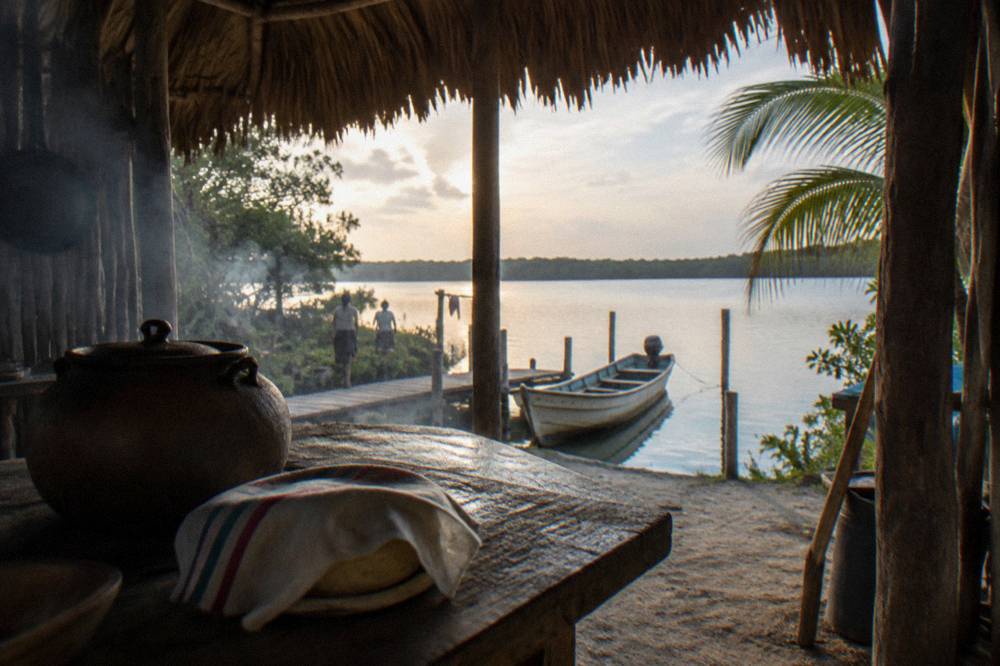
Yes, in practice if not in paperwork: the reserve sits in a region where Yucatec Maya is spoken daily, and boats at the Muyil dock are run by the local ejido cooperative, and some listed tours, like Community Tours Sian Ka'an, are cooperative-run, so the language of the name is a living one rather than a museum label. Access to the reserve is limited to authorized points, Muyil and the Punta Allen side among them, and organized entry runs through those cooperatives and licensed operators. Independent visits are restricted. That structure is why so many listings read the way they do, naming traditional Mayan cuisine, native Mayan cooks and certified local guides among their inclusions.
The 8-hour ancient Maya canals tour from Community Tours Sian Ka'an, from $162 per person and rated 4.8 from 611 reviews, is the clearest expression of it. Its listed inclusions include breakfast of traditional Mayan cuisine prepared by native Mayan people, a certified local guide specialized in Mayan culture and nature, and water refills at the cooperative's Mayan palapa. Its listed exclusions name the reserve's federal entry fee, about MXN 225 per person, payable separately. The same cooperative runs the kayak line above. That is the actual operator, not just a name on the listing.
The name also carries weight beyond tourism. In October 2026, federal environment authorities confirmed that no major new mass-tourism development will be authorized inside the reserve, with the stated focus remaining conservation and small-scale community tourism. For a place whose name is borrowed from the language of its original caretakers, that decision keeps the word and the land pointed the same way.
What Comes With The Name Today: Fees, Rules And Hours?
Entry to the reserve costs MXN 225 per person per day, collected by CONANP at the Caseta Arco Maya on the Punta Allen side and at Caseta Muyil, with the reserve open daily from 7:00 to 18:00, and a paper bracelet serving as proof of payment; some tours include the fee and some exclude it, exactly as each listing states. The Muyil archaeological zone inside the reserve charges separately under INAH: MXN 80 for nationals and foreign residents, MXN 145 for foreign visitors, daily 8:00 to 17:00 with last entry at 16:30. The INAH page for Muyil lists the site's rules too: no food, no pets, no smoking.
The rules follow from the name's status. Visitor rules as reported list no sunscreen among the prohibited items inside the reserve, and "reef-safe" has no legal meaning in Mexico, so the practical advice is shade, a rash guard, a hat and no sunscreen in the water at all. Drones are prohibited in protected natural areas, and separately over archaeological zones like Muyil. Feeding, touching or chasing wildlife is banned. Licensed guides are the norm on the water, and life jackets are standard on the canal float, where life jackets are provided and required for the canal float. The what-to-bring guide on this site turns all of it into a packing list.
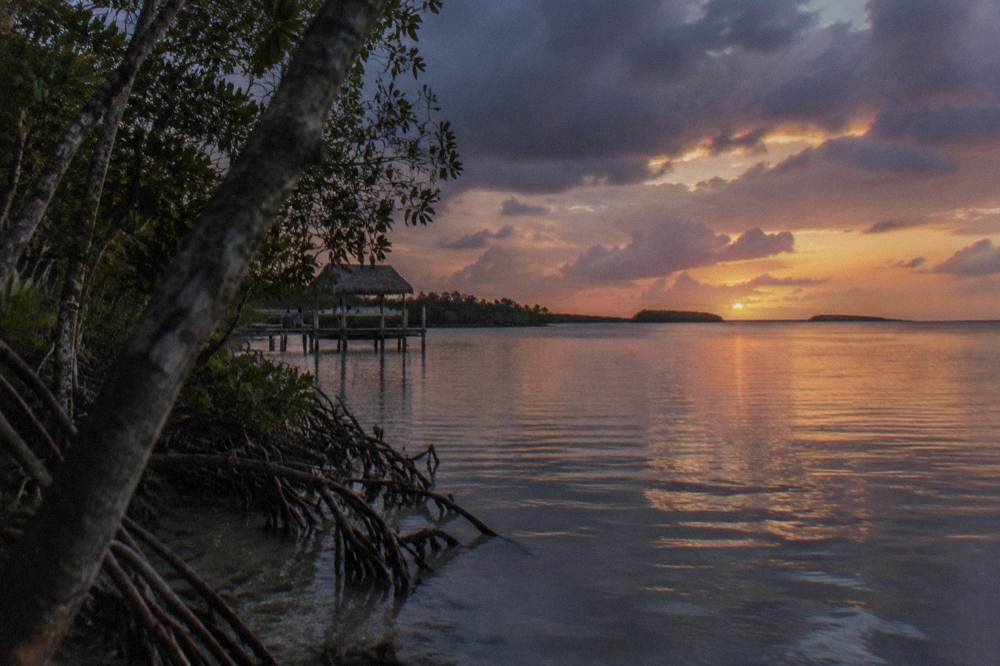
The sunset kayak, 3 hours with a group max of 8, from $120 per person and rated 5 from 316 reviews, is the tour that closes the loop on the name: two Maya words about the sky, experienced at the hour the sky does the most work. Its listing includes certified kayak guides, safety equipment and wildlife interpretation, and names the reserve entry fee, MXN 225, as payable separately. The sunrise version, same operator, same price, rated 5 from 25 reviews, runs the same water at dawn for guests who want the lagoon to themselves.
Can The Name's Meaning Change How You Visit It?
Treating Sian Ka'an as a named, bounded, community-run place rather than a generic eco-attraction changes three practical choices: which access point you enter, which operator you book through, and how much of the day you give it, since the reserve's shape rewards the longer formats that cross from ruins to lagoon to sea. A visitor who only knows the name as a word on a brochure tends to book the shortest thing available. A visitor who knows it marks 528,148 hectares, two casetas, a living Maya community and 373 bird species tends to plan differently.
The half-day tours with lunch split the difference well for shorter trips. The 6-hour half-day discovering tour from Tulum, from $204 per person and rated 4.9 from 270 reviews, lists boat with snorkeling equipment and life vest, lunch, fruit, water, snacks and Tulum hotel pickup as included. The 6-hour half-day from the Riviera Maya, from $204 per person, small group, adds reserve entrance fees and air-conditioned transport to its inclusions list. Both carry the name into a manageable day, with pickup in Tulum for travelers staying in town.
Private formats exist for visitors who want the name without the group. The 6-hour private guided adventure from Tulum, from $249 per person, rated 5 from 43 reviews, lists snacks, bottled water, air-conditioned vehicle, parking fees and lunch as included. The private Muyil lazy river tour, from $229 per person, rated 5 from 46 reviews, covers ruins, a river cruise and all entrance fees in its listed inclusions (see Lazy River Near Tulum). On the far end, the private full-day adventure, from $619 per person and rated 4.9 from 48 reviews, includes the boat with snorkeling equipment, the guide, and pickup from Tulum hotels. The MXN 225 fee applies at either caseta, Arco Maya or Muyil, though several of these tours already include it.
The birdwatching morning above is the format this article keeps returning to for name-conscious travelers: five hours, from $119 per person, breakfast and all fees and taxes listed as included, with binoculars lent if you ask ahead. It moves slowly through the Muyil ground where the ancient name and the living village sit closest together.
Common Questions About The Meaning Of Sian Ka'an
What Does Sian Ka'an Mean In Mayan?
The name is Yucatec Maya. Popular renderings include "origin of the sky" and "gift of heaven", but translations vary and no single official gloss exists, so none can be called the certain one. The words carry senses of sky and origin in combination, and the reserve took the name by federal decree in January 1986.
How Do You Pronounce Sian Ka'an?
Roughly "see-ahn kah-AHN", with a glottal stop, a small catch of the breath, where each apostrophe sits, the same catch as in the English "uh-oh". The apostrophe is meaningful in Maya writing, not decoration.
Who Named The Sian Ka'an Reserve?
The reserve was created by federal decree published 20 January 1986 in the Diario Oficial, which fixed its 528,147.67 hectares and three core zones. The Maya name was chosen for a landscape where Yucatec Maya is still spoken by the communities who hold the boat and guide concessions inside it.
Is Sian Ka'an A Mayan Site As Well As A Nature Reserve?
Both. The reserve contains the Muyil archaeological zone, open daily 8:00 to 17:00 with last entry at 16:30, entry MXN 80 for nationals and foreign residents and MXN 145 for foreign visitors, plus ancient Maya canals that tours still float today. Muyil reopened to the public about 11 February 2026 after a closure dating to June 2024.
Do You Pay A Fee To Enter The Place The Name Covers?
Yes. The CONANP reserve entry fee is MXN 225 per person per day, collected at Caseta Arco Maya on the Punta Allen side and at Caseta Muyil, with a paper bracelet as proof. Some tours include the fee and some list it as a separate payment, exactly as each listing states.
Which Tour Best Shows What The Name Covers?
The 10-hour full-day boat trip to Punta Allen from Tulum covers the most ground, from $254 per person, and its 4.9 rating from 1,227 reviews makes it the most reviewed tour on this site. For the Maya history inside the name, the Muyil ruins and canal float from $219 per person is the direct route.