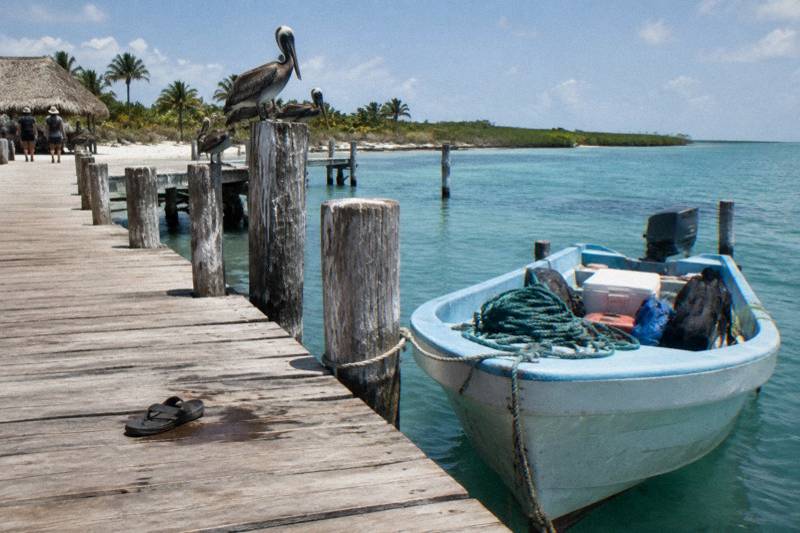
Where Is Sian Ka'an Located?
Where Sian Ka'an sits on the map: Quintana Roo, south of Tulum, 528,148 hectares of coast, lagoon and jungle, with its two official entry points and the towns that serve them.
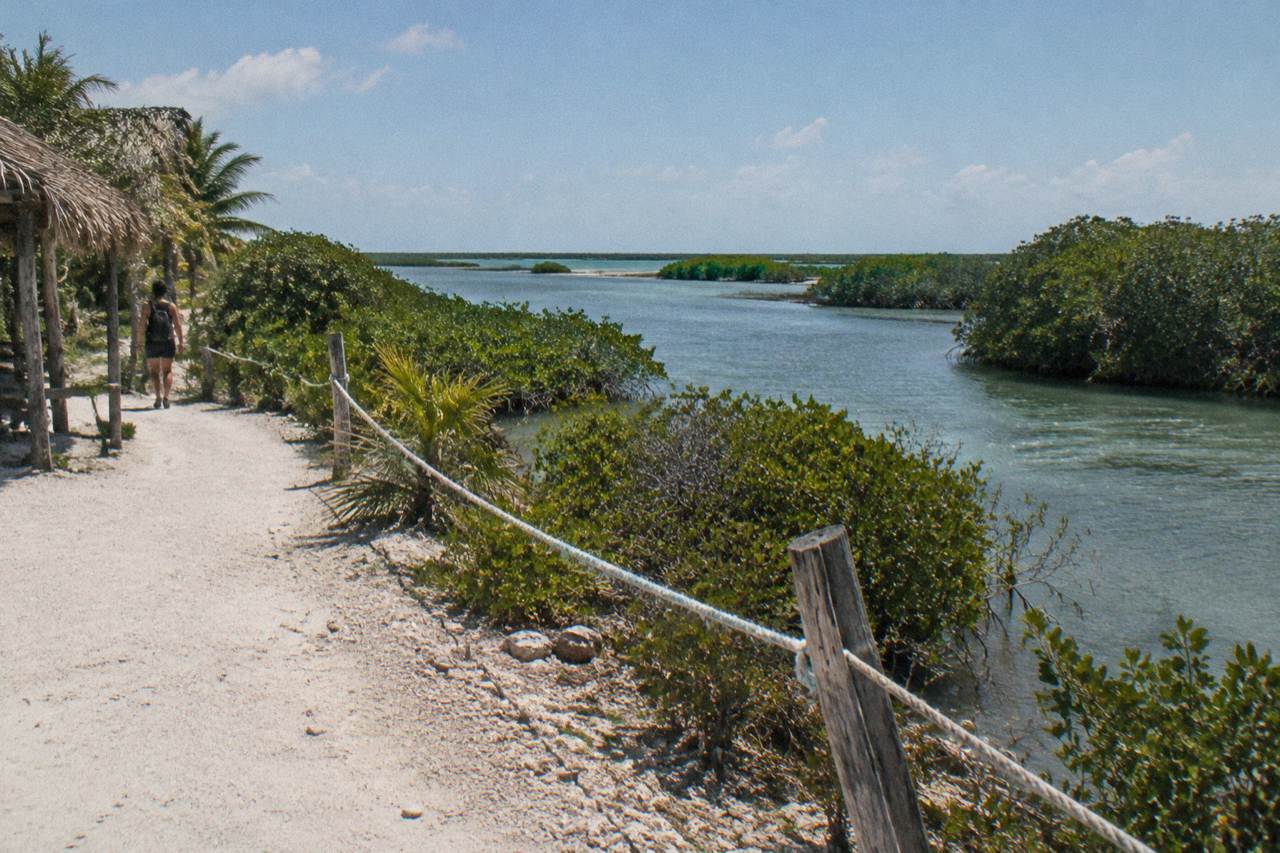
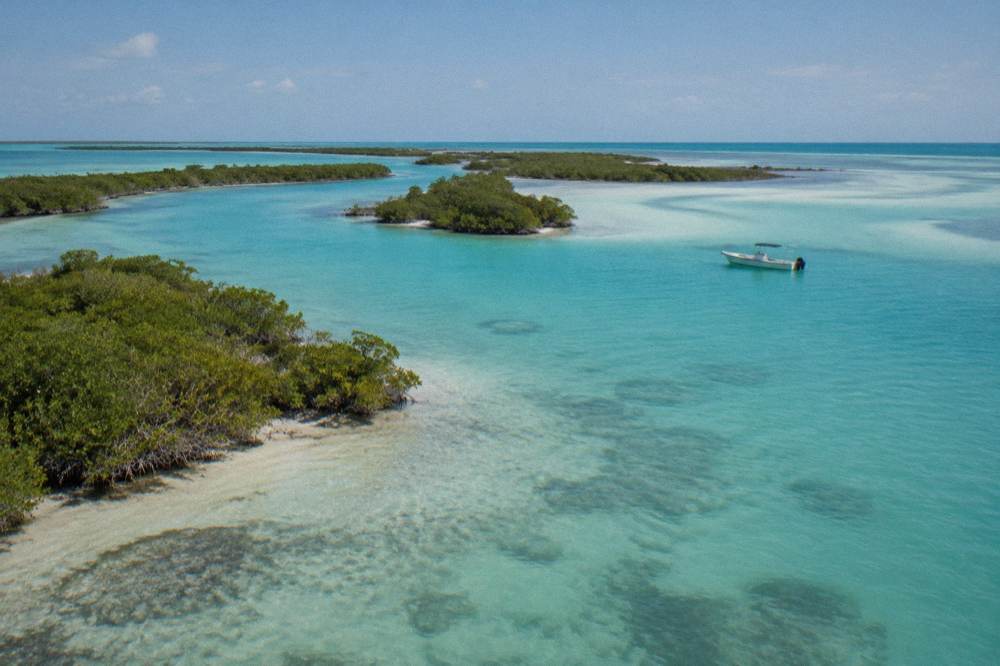
Sian Ka'an occupies a stretch of the Caribbean coast of Quintana Roo, in the southeast of Mexico, starting a short drive south of Tulum and reaching down the shoreline past Punta Allen. The reserve covers 528,148 hectares of lagoons, mangrove, tropical forest, wetlands and reef, with about 120 km of coastline inside its boundary. It was inscribed as a UNESCO World Heritage site in 1987, and its name, in Mayan, is usually translated as "where the sky is born." This page pins down exactly where it is, which entry points exist, and which towns a visitor actually departs from.
Where In Mexico Is Sian Ka'an?
Sian Ka'an is located on the east coast of the Yucatan Peninsula, in the state of Quintana Roo, Mexico, directly south of Tulum. Its northern access point, Caseta Muyil, sits about 23 km from Tulum on Federal Highway 307, while the coastal route enters at Caseta Arco Maya on the edge of Tulum's hotel zone and runs about 50 km of dirt road down to Punta Allen.
The reserve was decreed on 20 January 1986 and inscribed by UNESCO the following year under criteria (vii) and (x), recognizing both its scenic limestone coast and its biodiversity. The official surface in the decree is 528,147.67 hectares, split across three core zones, Muyil, Cayo Culebras and Uaimil, plus a large buffer zone.
The UNESCO listing describes more than 300 bird species, four nesting sea turtle species and a small West Indian manatee population, alongside jaguar, puma, ocelot and tapir in the terrestrial core. The CONANP 2025 inventory counts 4,091 documented species in total. You can read the listing at the UNESCO World Heritage page for Sian Ka'an.
For a traveler, the geography matters more than the numbers. Every tour on this site departs from Tulum or from points north along the Riviera Maya, because the reserve has no resorts, no big hotels and no mass infrastructure inside it. Semarnat and CONANP confirmed in October 2026 that no major new mass-tourism development will be authorized inside the reserve, and access is limited to authorized points where cooperatives and licensed operators manage entry. Orientation comes first: once you know which corner of the reserve you are heading for, Muyil in the north or Punta Allen at the end of the coast road, choosing a tour becomes straightforward. The featured Muyil Archaeological Site & Sian Ka'an Guided Tour from Tulum, from $219 per person, covers the northern gateway, and Check availability if that corner suits your dates.
What State And Country Is Sian Ka'an In?
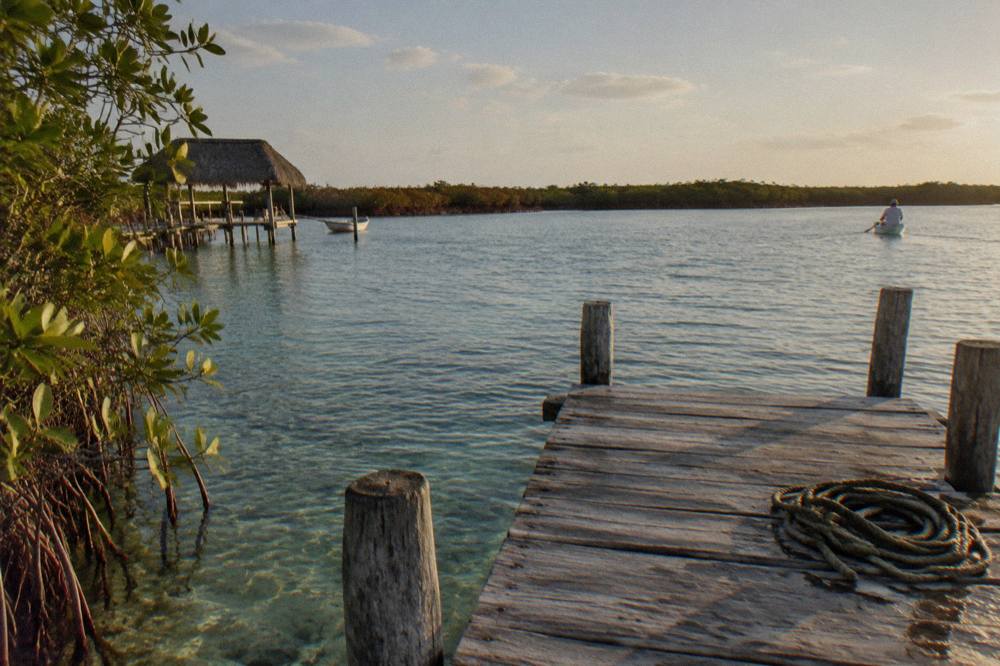
Sian Ka'an is in Mexico, in the state of Quintana Roo, on the country's Caribbean coast. Quintana Roo occupies the eastern half of the Yucatan Peninsula, and the reserve lies in its southern coastal band, in the municipalities of Tulum and Felipe Carrillo Puerto, on the Caribbean coast of Quintana Roo, the state capital near the border with Belize.
That political placement explains almost everything about how the reserve is visited. Quintana Roo's tourism corridor runs south from Cancun through Playa del Carmen and Tulum, and Tulum is the last real town of any size before the reserve's boundary. South of Tulum, Highway 307 continues inland of the coast, passing the Muyil access at kilometer 208, then pushing on toward Felipe Carrillo Puerto, Limones and eventually Chetumal. The coast itself, from the Tulum hotel zone down to Punta Allen, belongs to the reserve's buffer and core zones, with only a handful of small fishing and ecotourism settlements along it.
The state is also home to the Tulum airport, TQO, which opened on 1 December 2023 about 20 km southwest of Tulum and gives the reserve its nearest air gateway, though Cancun airport, roughly 125 km north of Tulum, still carries most international arrivals. Both feed the same corridor, and most tours on this site include pickup from Tulum, with some extending to Playa del Carmen and the Riviera Maya for extra fees that the listings state openly, between $10 and $45 per person depending on distance.
Worth knowing: the reserve is a Ramsar site as well, number 1329, designated in November 2003 across an even larger 652,193-hectare polygon of wetlands. The layering of federal decree, UNESCO inscription and Ramsar designation is why development inside the boundary stays restricted, and why the map of the area has stayed so empty compared with the coast to the north.
Between the two names you will keep hearing, Muyil and Punta Allen, sits the whole geography of a visit. Muyil is the archaeological and lagoon gateway in the north; Punta Allen is the lobster-fishing village at the far end of the coast track. The full-day boat trips that reach Punta Allen, like the Punta Allen Adventure trip with reef snorkel and lunch, from $254 per person, run about 10 hours precisely because of where they have to go. Our guide to the Punta Allen full day trip covers what that long day actually contains.
Where Are The Entry Points To The Biosphere?
The reserve has two official CONANP entry points on the northern side: Caseta Muyil, on Federal Highway 307 about 23 km south of Tulum, which serves the ruins, the lagoon and the ancient Maya canals, and Caseta Arco Maya at the northern end of the coastal dirt road, through which all Punta Allen traffic passes. Both collect the federal entry fee of MXN 225 per person per day.
The fee is collected by CONANP staff at the casetas, and a paper bracelet is the proof of payment, so keep it on your wrist if you plan to move between the dock and the ruins. Exemptions exist for seniors, pensioners, disabled persons and children under 12 with credential, and a 50 percent discount applies to students and teachers with credential. The reserve is open daily from 7:00 to 18:00. The official CONANP page for the Sian Ka'an Biosphere Reserve states the fee, the hours and the 50 km dirt-road distance from the Arco Maya checkpoint to Punta Allen.
Independent access is restricted. The CONANP page describes transport into the reserve as being by private or rented car or through authorized operators, and the boat and dock operations at Muyil lagoon are run by the local Mayan ejido cooperative. Some tours include the federal fee in their price, and some list it as an exclusion payable on site; the community-run Ancient Maya Canals Tour, for example, lists the MXN 225 fee as an exclusion, while the Muyil ruins lazy river tour from Tulum lists entry fees among its inclusions. Reading the inclusions line on a listing before booking saves a cash surprise at the palapa.
| Entry point | Where it is | What it serves | Distance from Tulum |
|---|---|---|---|
| Caseta Muyil | Federal Highway 307, km 208 | Muyil ruins, lagoon boat dock, ancient canals float | About 23 km |
| Caseta Arco Maya | End of the Tulum hotel zone, coast side | Punta Allen road, Boca Paila lagoon side | At the southern edge of Tulum |
| Caseta Pulticub | Southern coastal approach | Southern reaches of the reserve, from the Chetumal side | 193 km from Chetumal |
Two practical rules attach to wherever you enter. Drones are prohibited throughout protected natural areas under CONANP rules, and separately over archaeological zones under INAH rules, so leave the quadcopter at the hotel. And the visitor rules reported for the reserve include no sunscreen at all in the water, a point covered in detail on our what to bring on a Sian Ka'an tour page; shade, a rash guard and a hat do the work instead.
Which Towns And Places Sit Around Sian Ka'an?
Tulum is the working base for the reserve, sitting at its northern edge about 23 km from the Muyil access. Southward along the coast lie only tiny settlements, Boca Paila and Punta Allen at the end of the dirt road, while inland on Highway 307 the towns are Felipe Carrillo Puerto and, further on, Chetumal, the state capital 193 km from the southern Caseta Pulticub.
Tulum wears two hats. The town center and the hotel zone host nearly every departure for the tours on this site, with pickup included on most Mexico Kan Tours and community co-op listings, and day trippers stage from both. Playa del Carmen, roughly an hour north by highway, is the second departure hub, with several listings, such as the Riviera Maya Ancient Maya Canals Tour and the full-day boat experience from Playa del Carmen, running pickups along the corridor; per-person surcharges apply to Mexico Kan Tours Tulum lines. Everything else covered here is indexed on Sian Ka'an Reserve.
Punta Allen, formally a small fishing village on the Ascension Bay side, is the settlement at the heart of the reserve's coastal experience. It sits at the end of the Punta Allen road, about 46 km of dirt track from the arch, a road whose rehabilitation was reported about 80 percent complete in October 2026 with driving times still at 3 to 4 hours until the works finish, when the projection drops to 40 to 45 minutes. Most rental car agreements prohibit that road, which is the single biggest reason travelers take boat tours that handle the transport themselves.
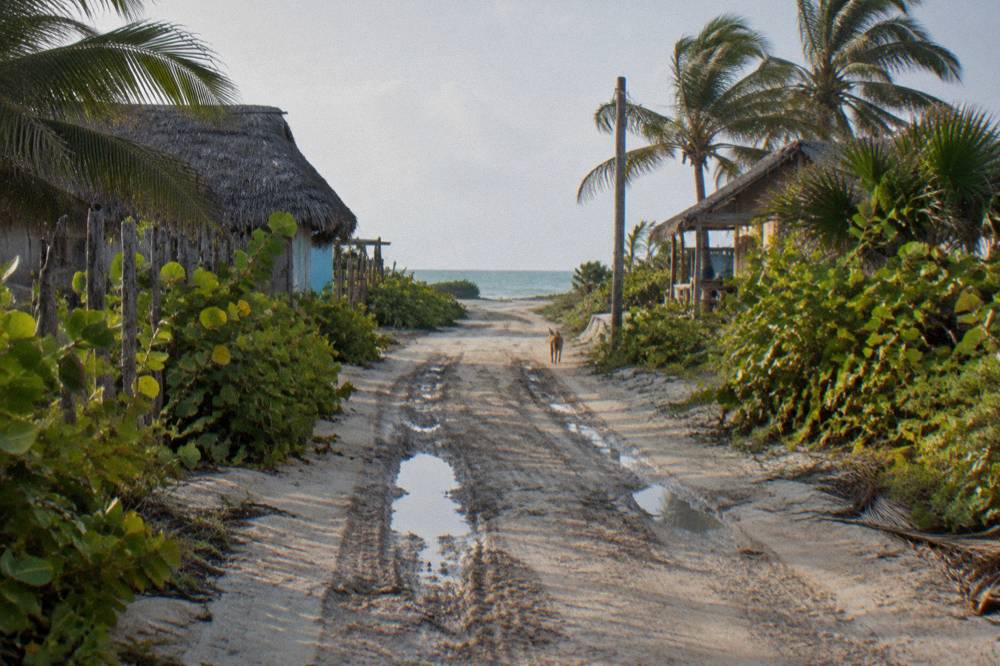
Muyil, sometimes called Chunyaxché after the lagoon dock area, is less a town than an archaeological zone with a cooperative palapa beside it. The INAH site, at Highway 307 km 208, reopened to the public about 11 February 2026 after a closure dating to June 2024, with 11 structures worked on and new visitor facilities added. Entry is MXN 80 for nationals and foreign residents, MXN 145 for foreign visitors, daily 8:00 to 17:00 with last entry at 16:30, per the official INAH page for the Muyil archaeological zone. The ruins are the anchor of the northern half of the reserve, and our Muyil ruins guide walks through what there is to see at Muyil.
How Far Is Sian Ka'an From Tulum, Playa Del Carmen And Cancun?
The Muyil entry to Sian Ka'an is about 23 km south of Tulum on Highway 307, while the coastal Arco Maya checkpoint sits at the southern end of Tulum itself. Cancun airport lies about 125 km north of Tulum, Playa del Carmen sits between the two, and Chetumal approaches from the south, 193 km from the Caseta Pulticub. Tulum is by any measure the closest practical base.
Distances inside the reserve matter as much as distances to it. The headline figure is the coast road: CONANP states 50 km of dirt road from the Arco Maya booth to Punta Allen, and 2026 reports describe about 46 km of roadway under rehabilitation. Riviera Maya News reported on 9 October 2026 that the work had passed 16 km with 5 to 6 km remaining before Punta Allen, and that trip times stood at 3 to 4 hours, with a projected 40 to 45 minutes once complete. In January 2026, before the works progressed, deterioration had pushed the arch-to-Punta Allen run to as much as 6 hours and had interrupted supplies to the village.
Cancun to the Arco Maya booth is about 180 km by Federal Highway 307, roughly a 2-hour drive. Those are the kinds of numbers that explain tour durations: a 10-hour Punta Allen day trip is not padded, it is simply the geography of a reserve that swallows its own coastline. Anyone weighing the drive themselves should read the Boca Paila road guide first, since most rental agreements rule the track out.
| From | To | Distance | Notes |
|---|---|---|---|
| Tulum | Caseta Muyil | About 23 km | Highway 307, paved |
| Tulum hotel zone | Caseta Arco Maya | At the town's southern edge | Coast road begins here |
| Caseta Arco Maya | Punta Allen | 50 km dirt road (CONANP) | 3 to 4 hours during 2026 works |
| Cancun | Arco Maya booth | About 180 km | Around 2 hours on Highway 307 |
| Chetumal | Caseta Pulticub | 193 km | About 3 hours 20 minutes, southern approach |
| Tulum airport (TQO) | Tulum | About 20 km | Airport opened 1 December 2023 |
Which Part Of The Reserve Should You Visit First?
Most first-time visitors should enter through Muyil, because it combines the reopened ruins, the lagoon boat ride and the ancient canal float in one compact northern visit reachable in a half day from Tulum. Travelers with a full day and a tolerance for long rides should take a Punta Allen boat trip, and anyone based in Tulum with only an afternoon can take a sunset or sunrise kayak on the lagoons.
The northern gateway suits the Muyil ruins and canal float products. The guided Muyil Archaeological Site & Sian Ka'an tour from Tulum runs 6 hours, from $219 per person, with hotel pickup and drop-off in Tulum included and group sizes capped at 12 per the listing, pairing the ruins walk with a boat ride and the float through the ancient Maya canals. The lazy river version from Tulum, also from $219 per person, includes entry fees and a snack with soft drinks, and lists breakfast and lunch as exclusions.
The southern, coastal half of the reserve is boat-trip territory. Day-long Punta Allen departures from Tulum, among them the full-day adventure with reef snorkel, fruit, snacks and lunch included, run about 10 hours, and the most-reviewed of the tours on this site, rated 4.9 from 1,227 reviews, sits exactly there. From Playa del Carmen, a full-day boat experience at from $229 per person covers the same coast with round-trip transport from the north. Dolphins, turtles and manatees are what the listings describe as possible sightings on these runs, and no honest operator promises them, but the lagoon and reef scenery is the constant.
The kayak option is the quietest way to see where the reserve's freshwater side meets the coast. The sunset kayak tour, from $120 per person, runs 3 hours in groups capped at 8, with paddle instruction and birdwatching interpretation from certified guides; the reserve entrance fee of MXN 225 is excluded and payable separately. The community cooperative's 4.5-hour kayak morning, from $102 per person, includes a traditional Mayan breakfast and lunch plus transport from downtown Tulum, and it is one of the cheapest guided options among the tours on this site.
A quick word on timing, since geography and season interact. A climate dataset puts the rainy season from May to October and the dry season from November to April, with around 1,120 mm of rain falling across 81 rain days in a year and sea temperatures between 26 and 29 C. Hurricane season runs officially from 1 June to 30 November, and 2026 has so far tracked below normal, with eight named storms and none reaching hurricane strength through early October. Sargassum has been unusually heavy in 2026 with early arrivals, though it affects open beaches more than the lagoon interior. The full picture, including the operator-guide view that birding is best from November to March, is in our best time to visit Sian Ka'an guide.
Common Questions About Where Sian Ka'an Is Located
Where Is Sian Ka'an Located?
Sian Ka'an is located on the Caribbean coast of Quintana Roo, Mexico, immediately south of Tulum. Its northern entry, Caseta Muyil, sits about 23 km south of Tulum on Federal Highway 307, and its coastal entry, Caseta Arco Maya, sits at the southern edge of Tulum's hotel zone, with Punta Allen about 50 km of dirt road beyond it.
Is Sian Ka'an In Tulum?
Not inside the town, but it starts practically at Tulum's southern boundary. Tulum is the staging town for nearly all reserve visits, and most tours on this site include hotel pickup there. The reserve itself contains no resorts or mass development, and no new large-scale development will be authorized inside it.
What Towns Are Closest To Sian Ka'an?
Tulum is the closest town of any size, followed by Playa del Carmen about an hour north along the Riviera Maya corridor. Inside and along the reserve's coast the only settlements are small ones, notably Boca Paila and Punta Allen at the end of the dirt road, while Felipe Carrillo Puerto and Chetumal sit inland and to the south.
How Far Is Punta Allen From Tulum?
The drive from the Arco Maya checkpoint at Tulum's edge to Punta Allen is a 50 km dirt road per CONANP, roughly 46 km of roadway per 2026 reports. During the ongoing rehabilitation it takes 3 to 4 hours, and the projection is 40 to 45 minutes once finished. Most rental car agreements prohibit the road, which is why boat tours that include transport are the standard way in.
Which Airport Is Closest To Sian Ka'an?
Tulum International Airport, TQO, which opened on 1 December 2023 and sits about 20 km southwest of Tulum, is the nearest airport to the reserve. Cancun airport, roughly 125 km north of Tulum, remains the busiest arrival point and feeds the same highway corridor south.
Do You Pay To Enter The Reserve, And Where?
Yes. CONANP collects MXN 225 per person per day at the entry casetas, Caseta Muyil and Caseta Arco Maya, and issues a paper bracelet as proof. Children under 12 with credential, seniors, pensioners and disabled persons are exempt, and students and teachers with credential pay half. Some tours include the fee and some list it as payable on site.