Muyil Ruins: What You See And How To Visit
Muyil is the largest archaeological site inside the Sian Ka'an Biosphere Reserve, a low-rise Maya city on a jungle trail that ends at a lagoon dock, where boat trips and canal floats begin. Here is what it costs, when it opens, and how the combo tours work.
Short answer
Muyil sits on Federal Highway 307 km 208, about 25 km southwest of Tulum inside the Sian Ka'an Biosphere Reserve. Entry costs MXN 80 for nationals and foreign residents and MXN 145 for foreign visitors, daily 8:00 to 17:00, last entry 16:30. The site reopened about 11 February 2026 after a closure since June 2024.
Muyil is an archaeological zone at the northern edge of the Sian Ka'an Biosphere Reserve, and it is one of the very few places on the Yucatan Peninsula where a Maya city, a jungle boardwalk, a freshwater lagoon and a hand-dug ancient canal sit within a single morning's walk of each other. The site spent roughly 20 months closed, from June 2024 until about 11 February 2026, while Mexico's National Institute of Anthropology and History worked on eleven structures and built a new visitor unit with parking, restrooms and signage. It is open again, and it has quietly become the most practical entry point into the reserve for travelers based in Tulum. If you're figuring out what the trip should cost, the guide to Sian Ka'an on a budget and free stops near Muyil covers what you can see without paying and where a cheap tour is honestly worth it.
This guide covers what the ruins actually look like, the fees and hours, the trail from the ruins to the Muyil lagoon, the canal float the area is known for, and the guided tours that stitch all of it together. Where a figure matters, it comes from the official sources: the INAH listing for the archaeological zone and the CONANP page for the reserve that surrounds it.
Where Are The Muyil Ruins And How Do You Get There From Tulum?
The Muyil archaeological zone sits on Federal Highway 307 at kilometer 208, about 25 km southwest of Tulum and inside the northern edge of the Sian Ka'an Biosphere Reserve. INAH lists the site as reachable by private or rented car along the highway, with Tulum the nearest base at 23 km from the Caseta Muyil access point.
The drive from Tulum is a straight run down Highway 307, the main Riviera Maya artery, and the site is signed from the highway. Tulum is the natural base: it is 23 km from the Caseta Muyil checkpoint, and the town holds most of the tour departures that visit the ruins. Cancun is farther out, about 180 km from the Caseta Arco Maya booth on the Punta Allen side of the reserve, roughly two hours by federal highway, which is why so many Cancun-based visitors end up on a full-day guided line rather than driving themselves.
Two practical notes shape the visit. First, Muyil is technically two experiences in one location: the INAH archaeological zone, which has its own entry fee and hours, and the reserve's lagoon and canals beyond it, which fall under CONANP's separate MXN 225 per person per day reserve fee. Second, access into the reserve itself is limited to authorized points, and independent visits are restricted; the cooperative dock and boat operations at the lagoon are run by the local Muyil ejido, the community cooperative whose members live beside the site. If you want the canal float without a guided tour, you arrange it with them at the palapa near the dock.
For most readers the deciding question is not how to get there but how much of the day to give it. The ruins alone are a short visit. The ruins plus the trail, the lagoon and the canal float fill half a day, which is exactly the shape of the popular combo tours from Tulum, including the Muyil ruins and canal float tour covered in its own guide on this site.
What Do You Actually See At The Muyil Ruins?
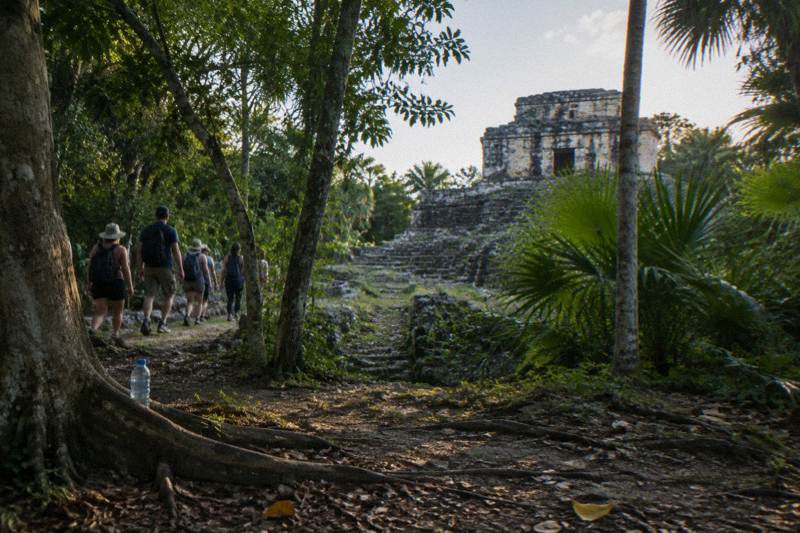
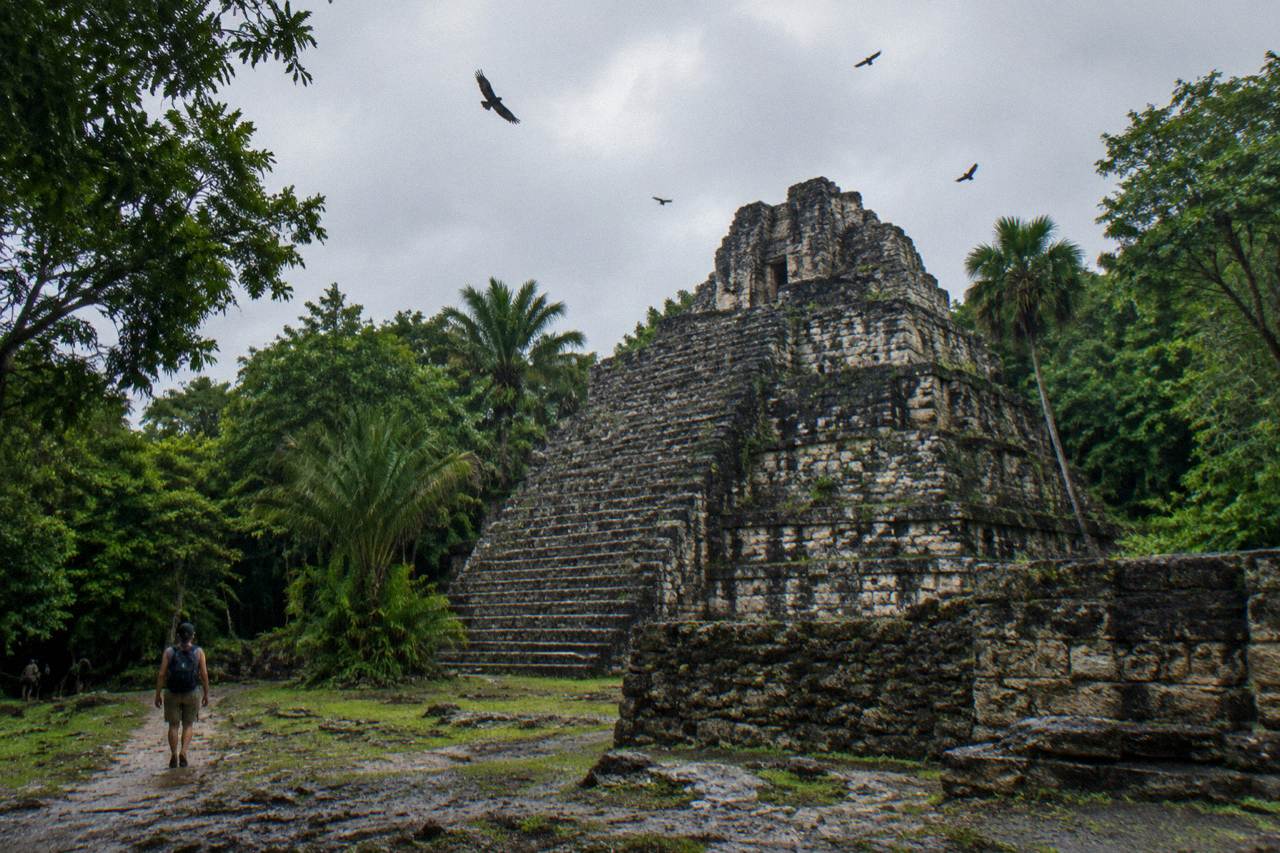
Muyil shows a compact, largely unexcavated Maya city: the Castillo, a pyramid built in the Peten style found far to the south, a sacbe, an ancient raised causeway, and several mounds still wrapped in jungle. INAH worked on eleven structures during the 2024 to 2026 closure, and the site remains deliberately low-key compared with Tulum or Chichen Itza.
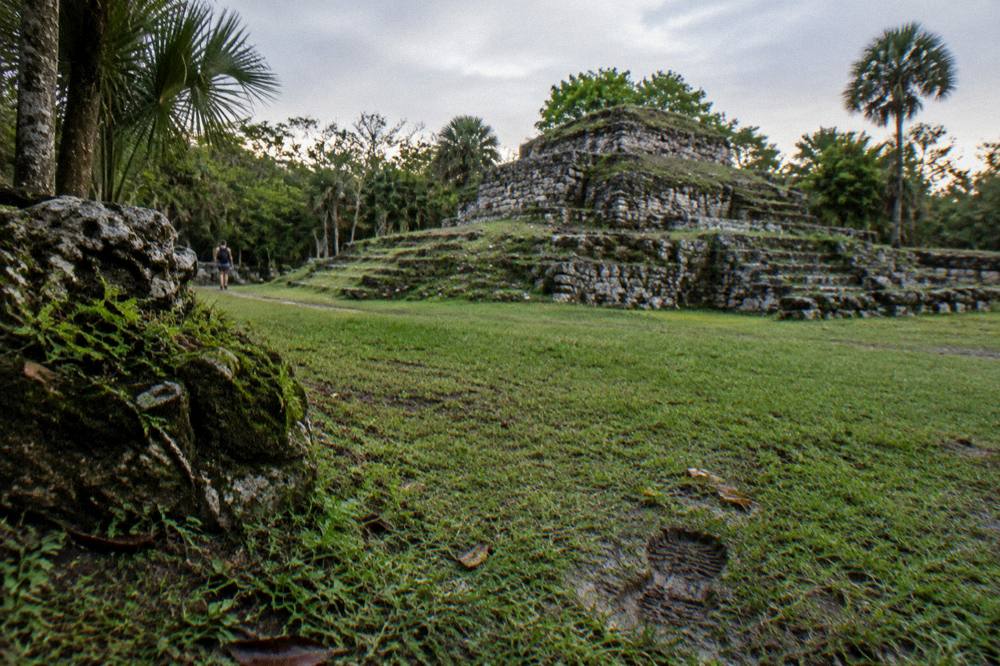
The Castillo is the headline structure, and it is unusual for the region. The main pyramid is the most visible result of the restoration work INAH has carried out across the site's structures, a reminder that Muyil sat on a trade route that ran from the lagoon system through the ancient canals toward the interior. The building was expanded in phases over centuries, and visitors walk around its base on a cleared path rather than climbing it.
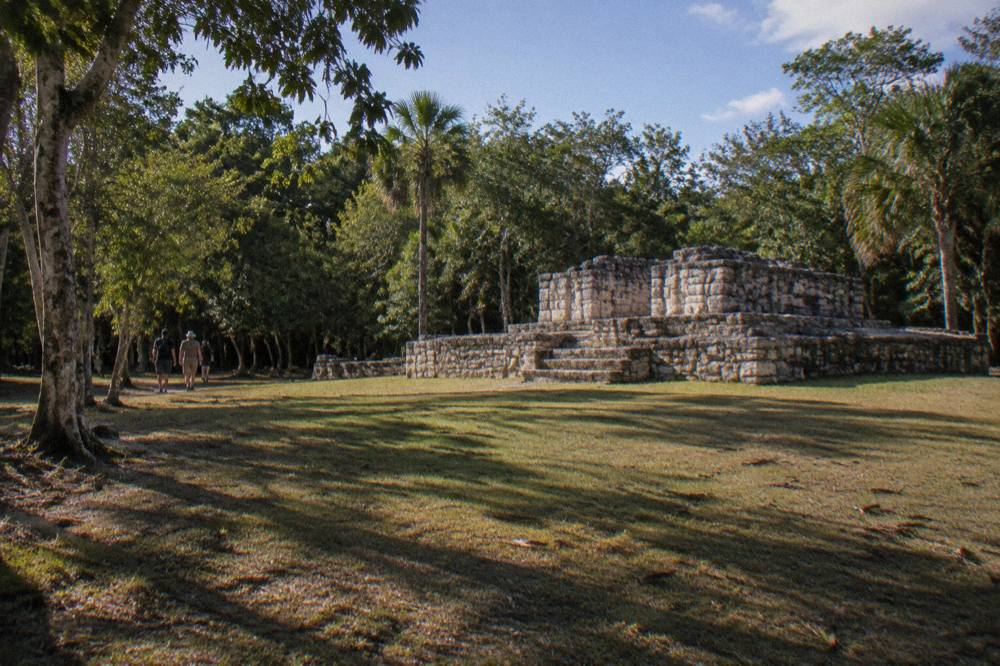
Around it, the site keeps the feeling of a forest reserve more than a theme park. Structures stand in clearings framed by tall trees; the signage installed with the 2026 reopening explains what is known about each group, and the crowd density stays low next to the coastal sites. The new visitor unit added parking, restrooms and defined trails as part of the same Promeza conservation program that closed the site for nineteen months. For anyone weighing the two, the comparison of the Tulum ruins against Muyil on this site breaks down the differences in setting, cost and crowds.
The question most readers are really asking is whether Muyil justifies its own half day. The honest answer is that the ruins alone are a stop, not a destination: the site's weight comes from what sits behind it, the trail and the lagoon. That is why nearly every commercial product here bundles the archaeological walk with the boat and the float. The three listings below are the most useful versions of that bundle, with prices and ratings taken from the tours on this site.
What Does It Cost To Enter Muyil And When Is It Open?
Muyil charges MXN 80 for nationals and foreign residents and MXN 145 for foreign visitors, an INAH Category III fee, daily from 8:00 to 17:00 with last entry at 16:30. The CONANP reserve fee of MXN 225 per person per day applies separately for the lagoon and canals, and some guided tours include one or both fees while others do not.
The two-fee structure catches out independent visitors more than anything else at Muyil. The INAH ticket covers the archaeological zone only. Once you walk past the ruins onto the trail toward the lagoon you are inside the biosphere reserve proper, and CONANP collects its per-person daily fee at the authorized access points, handing over a paper bracelet as proof of payment. The fee schedule carries exemptions for seniors, pensioners, disabled persons and children under 12 with credential, and a 50 percent discount for students and teachers with credential, per the official CONANP page for the reserve.
| Item | Fee | Who collects it | Notes |
|---|---|---|---|
| Muyil archaeological zone, nationals and foreign residents | MXN 80 | INAH | Category III fee, per the INAH listing |
| Muyil archaeological zone, foreign visitors | MXN 145 | INAH | Same listing, daily 8:00 to 17:00 |
| Sian Ka'an reserve entry | MXN 225 per person per day | CONANP at Caseta Muyil or Caseta Arco Maya | Covers the lagoon and canals; paper bracelet issued |
| Guided combo tour from Tulum, ruins and float | From $219 per person | Operator | Whether entry fees are included varies by listing, so check the details before you book |
If the floating canal tour leaves you curious about paddling the same waters yourself, our guide to kayaking Sian Ka'an's lagoons and canals explains where tours launch, how hard the routes are, and what the reserve fee adds.
Whether a tour absorbs these fees depends entirely on the listing. The 6-hour Muyil ruins and lazy river tour from Tulum lists "Entry fees" among its inclusions, while the 8-hour cooperative canals tour names the federal reserve fee in its exclusions, at approximately US$14 per person payable separately. The shared birdwatching tour's listing shows "All Fees and Taxes" as included. There is no single rule; read the inclusions line on the operator's live listing before assuming anything.
This is also where the closure history matters for planning. Muyil reopened to the public about 11 February 2026 after being closed since June 2024, so any blog post, forum thread or guidebook describing a visit before mid-2024 reflects a site that no longer exists in that form: the visitor facilities are new, the trail signage is new, and eleven structures received conservation work. If your research predates the reopening, treat the practical details as stale.

If the two-ticket structure and the transport question feel like more planning than you want, the guided lines handle it: pickup in Tulum, entry logistics and the boat are arranged by the operator, and free cancellation is listed across the Muyil combo products.
What Is The Jungle Trail From The Ruins To The Lagoon Like?
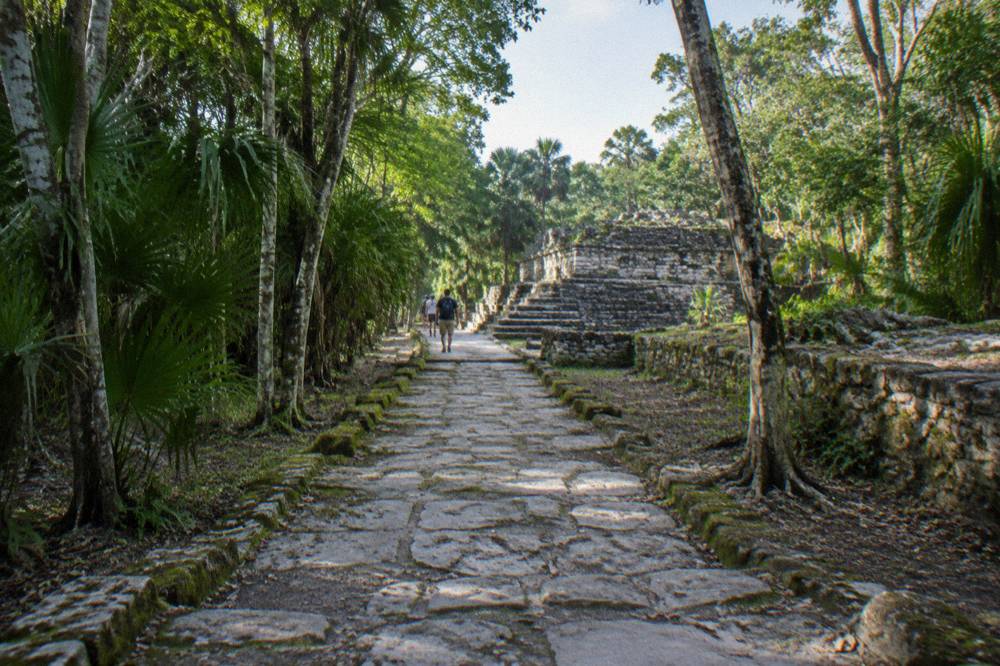
A boardwalk-and-trail route, the Camino Blanco, runs from the ruins through flooded jungle to a dock on the Muyil lagoon, with an observation tower along the way. It is flat, shaded and walked at an easy pace, and it is the only practical way to reach the boat dock unless you arrive by water.
The trail is the quiet highlight of Muyil and the part most first-time visitors underrate. It leaves the cleared archaeological core and enters flooded forest: strangler figs, mangroves, ferns and the sound of the lagoon system ahead. The observation tower partway along gives a view over the tree canopy to the water, one of the few elevated vantage points anywhere in the reserve's publicly accessible northern section. Fresh reporting on the canals notes the trail ends at the boat dock on the lagoon, where the cooperative's boats wait.
Timing-wise, the trail adds real minutes to a visit but not hours. Walked with a guide who stops for birds and plants, it comfortably fills the middle stretch of the half-day tours; walked alone at pace, it is a short forest stroll. Birders get the most from it: the reserve's official 2025 inventory records 373 bird species, and the mixed habitat along the trail, dry forest fading into wetland, is where much of that list lives. The birdwatching products in the area, including the small-group Muyil birding walks, use this trail as their spine.
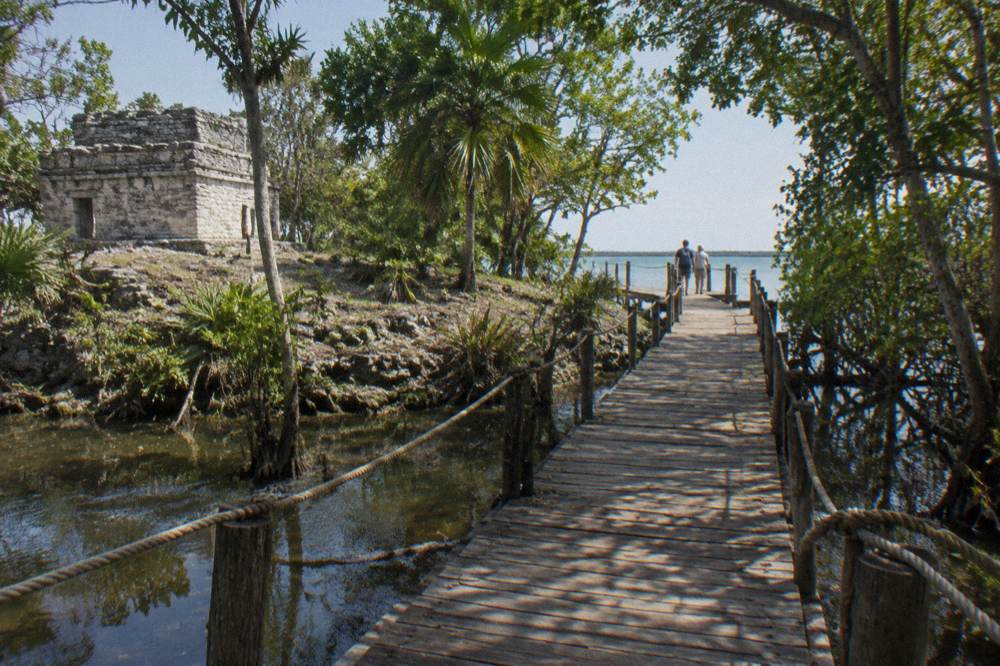
Practical notes for the trail: no food, no pets and no smoking are the posted INAH rules for the zone, and they apply along the walk. Drones are prohibited both in protected natural areas under CONANP rules and over archaeological zones under INAH rules, so leave yours at the hotel. And because the trail is shaded and damp, insects are simply part of the deal; long, light clothing does more than any spray.
Can You Float The Ancient Mayan Canals From Muyil?
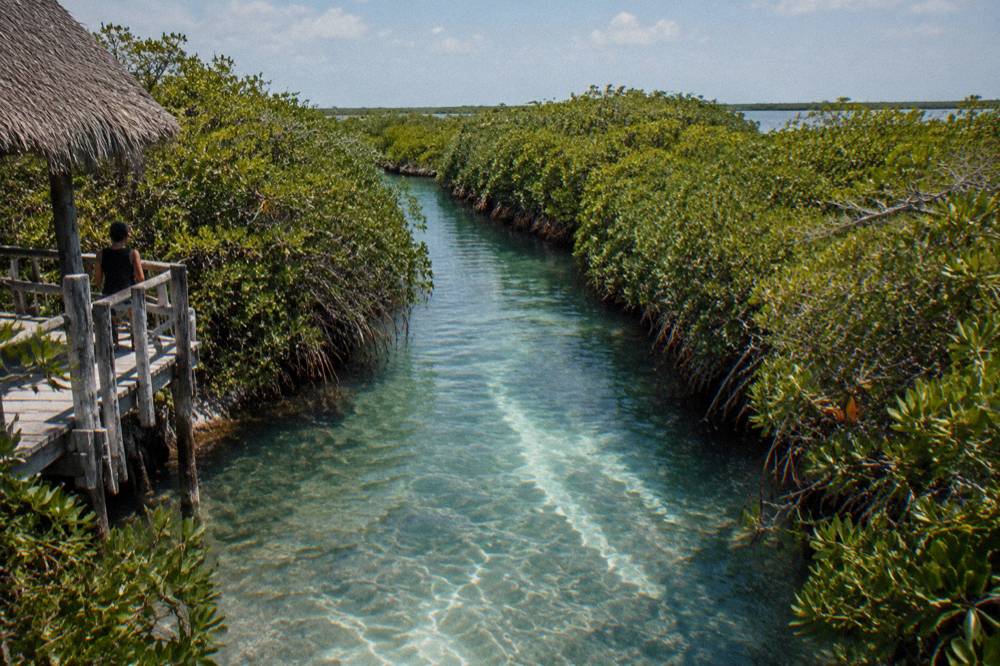
Yes. From the lagoon dock, boats cross to the entrance of a hand-dug ancient Maya canal, and visitors float roughly 950 meters down it carried by the gentle current, a contemplative drift lasting about 30 to 45 minutes. Life jackets are provided and required, and the float is the signature experience of the Muyil side of the reserve.
The canals are the reason Muyil is on most itineraries at all. They are pre-Hispanic works, dredged and maintained by the Maya to move goods between the lagoon system and trade routes inland, and today they function as a slow, shallow natural lazy river. Floaters lie back in the current, mangrove walls on both sides, and drift. Operators describe the float as roughly 950 meters and 30 to 45 minutes; the life jackets issued are worn upside down in the local style, and they are mandatory.
There are two ways to do it. Independently, you pay INAH at the ruins, walk the trail, and arrange the boat and float with the Muyil ejido cooperative at the palapa near the dock; a 2026 travel report puts the independent boat and float at MXN 1,000 per person, about two hours in total, though that is an operator-side price rather than an official tariff, so confirm on the day. Guided, you book a combo line and everything from Tulum pickup to the float is handled. Among the guided options on this site, the 6-hour ruins and lazy river tour from Mexico Kan Tours runs from $219 per person, with entry fees, a certified guide and Tulum hotel pickup among its inclusions. The cooperative canals tour from Community Tours Sian Ka'an takes 8 hours and costs from $162 per person. Groups stay small, capped at 12, with a traditional Mayan breakfast on the Early Morning departure and a Mayan lunch on both departures, with the federal reserve fee listed as a separate payment.
Between those two, the differences are real rather than cosmetic: the shorter line is built around the ruins, boat ride and float in six hours from Tulum, while the cooperative's 8-hour version adds the community breakfast, the Mayan palapa with water refills, and a midday or early-morning departure choice from Tulum center, the hotel zone, Playa del Carmen or Akumal. Same patch of reserve, different shape of day. A deeper breakdown of all five Muyil canal float listings, including the shorter float-only line from Tulum Diving and Travel, from $170 per person for 3 to 5 hours, sits in the site's guide to the Muyil floating canals.
For anyone who has read about a lazy river near Tulum and wondered whether it is a real thing, the canals at Muyil are the answer: is there a lazy river near Tulum covers the question directly, and the Muyil canals are it.
Which Tours Combine The Muyil Ruins With The Canal Float?
Five bookable listings combine Muyil with the lagoon or canals, ranging from $162 to $219 per person and from 3 to 8 hours. The pick for most travelers is the 6-hour Muyil archaeological site and Sian Ka'an guided tour from Tulum, 4.9 from 846 reviews, from $219 per person, with Tulum hotel pickup and free cancellation listed. If a shared group departure sounds less appealing than having the water to yourself, the guide to Sian Ka'an private and sunset lagoon tours compares what a dedicated boat and an evening start each add to the cost.
We compared the listings line by line. The differences that matter are duration, what the price includes at the gate, and whether the operator is a community cooperative or a commercial outfitter.
| Listing | Duration | Price | Rating | What it includes on the listing |
|---|---|---|---|---|
| Muyil Archaeological Site & Sian Ka'an Guided Tour from Tulum | 6 hours | From $219 per person | 4.9 from 846 reviews | Tulum hotel pickup and drop-off, guide, water, snacks; max 12 |
| Sian Ka'an Reserve Ancient Maya Canals Tour | 8 hours | From $162 per person | 4.8 from 611 reviews | Mayan breakfast, local guide, Tulum or Riviera Maya pickup; max 12; reserve fee excluded |
| Muyil Ruins & Sian Kaan Lazy River | 6 hours | From $219 per person | 4.8 from 439 reviews | Tulum pickup, entry fees, guide, snack and soft drinks; max 12 |
| Sian Kaan Muyil Floating Canals | 3 to 5 hours | From $170 per person | 4.7 from 49 reviews | Taxes, fees, reef tax, park fees, water; max 12 |
| Sian Kaan Lagoons | 3 to 4 hours | From $195 per person | 4.7 from 21 reviews | Fees and taxes, snorkel gear, snacks, transport to sites; max 6 |
The featured line on this page is the 6-hour guided tour from Mexico Kan Tours, and it earns the spot on the strength of its review pool: 4.9 across 846 reviews is the deepest track record among the Muyil combos. It includes hotel pickup and drop-off in Tulum, a professional guide, bottled water and snacks, and it caps groups at 12. Its exclusions are worth reading: pickups north of Tulum carry surcharges, from $10 per person between Conrad Tulum and Puerto Aventuras up to $45 per person for the Cancun downtown area, which matters if you are staying outside Tulum.
If your Muyil day is really a birding day, the shared birdwatching tour is a different animal: it meets at the Muyil site at 6:00, Tulum pickup adds $50 per person, 5 hours, from $119, 5.0 from 125 reviews, max 10, with breakfast, coffee and all fees and taxes included, and an optional boat tour and lazy river float add-on at extra cost. It walks the same ruins and the same trail, but at birding pace, in the hours when the canopy is loudest. Binoculars are not included; the operator lends a pair if you ask in advance.
For a completely different register of the same reserve, the full-day Punta Allen boat trip, the most reviewed tour on this site at 1,227 reviews, runs the marine side: reef snorkeling, a village lunch and the lagoon system by boat, from $254 per person for 10 hours. Some travelers do Muyil one day and Punta Allen the next, which together cover both halves of what the biosphere protects.
How Does Muyil Compare With The Tulum Ruins?
Muyil is cheaper to enter, far less crowded and set in deep jungle with a lagoon behind it, while the Tulum ruins are a clifftop coastal site with bigger name recognition, higher visitation and a car-free access scheme. Muyil's fee is MXN 145 for foreign visitors. Check INAH for Tulum's current fee, so compare on setting and experience rather than price.
The honest framing is that they are different products. Tulum is a postcard: ruins on a cliff above the Caribbean, easy from town, busy by mid-morning. Muyil is an immersion: a quiet forest site, a walk through flooded jungle, and a float down a canal the Maya dug more than a thousand years ago.
| Factor | Muyil | Tulum ruins |
|---|---|---|
| Setting | Jungle and freshwater lagoon | Clifftop over the Caribbean |
| Entry fee | MXN 80 / 145 (INAH, verified) | No verified figure on this site's files |
| Hours | Daily 8:00 to 17:00, last entry 16:30 | Not published; treat any exact figure with caution |
| Crowds | Low, per fresh 2026 reporting | High, per widely reported visitation |
| Add-ons | Canal float, lagoon boat, birding walks | Beach below the site |
| Closed history | Reopened about 11 February 2026 after June 2024 closure | Not comparable |
If the comparison leaves you unsure whether Muyil earns a spot on your itinerary, our researched verdict on Muyil and its canal float settles the question.
The one thing Muyil cannot match is Tulum's walkability from a hotel strip. Muyil needs a car, a colectivo arrangement you must confirm locally, or a tour with pickup. A fuller head-to-head, including how the two sites split a single day trip from Tulum, is in the site's Tulum ruins versus Muyil guide.
What Rules Apply Inside The Reserve At Muyil?
INAH prohibits food, pets and smoking in the archaeological zone, and CONANP's posted visitor rules for the reserve extend to no sunscreen in the water, no drones, no feeding or touching wildlife, and no collecting plants or animals. Life jackets are mandatory on the canal float, and licensed local guides are required on tours.
The sunscreen rule is the one that surprises people, and the reporting on it is specific: the CONANP visitor page for Sian Ka'an lists no sunscreen among its prohibitions, and "reef-safe" has no legal meaning in Mexico, so the safe move is shade, a rash guard, a hat and no sunscreen at all in the water. Plan for it: if you are floating the canal, cover up rather than cream up. Biodegradable sunscreen is sometimes described as acceptable after water activities, but the posted rule is the posted rule, and this site reports it as the visitor rules state it.
Drones are a hard no in both directions: CONANP prohibits them in protected natural areas except authorized research flights, and INAH prohibits them over archaeological zones. Wildlife rules follow the same logic, no feeding, no touching, no chasing, observation from a distance, which applies to everything from the birds along the trail to the crocodiles and manatees the reserve's fauna lists include. The UNESCO listing for the reserve names the West Indian manatee and the American crocodile among its representative fauna; both are wild animals whose presence is possible, never promised.
Weather planning deserves one paragraph. A climate dataset puts Tulum's rainy season from May to October and the dry season from November to April, with about 1,120 mm of rain across 81 rain days in an average year and sea temperatures of 26 to 29 C. The dry months align with the operator-guide view that birding is best from November to March, when northern migrants join the resident species. None of that promises a dry day or a particular bird; it just tells you which months carry the most water and which carry the most birds, per the guides who work the trail daily.
Whatever month you choose and whichever half of the reserve you pick, the practical core of a Muyil day is the same: one fee at the INAH gate, another MX$50 for the boardwalk trail beyond it, a walk through the jungle to the water, and a float down an ancient Maya canal fringed by mangroves.
Common Questions About The Muyil Ruins
How Much Does It Cost To Enter The Muyil Ruins?
MXN 80 for nationals and foreign residents and MXN 145 for foreign visitors, INAH Category III fees. The CONANP reserve fee of MXN 225 per person per day applies separately once you continue past the ruins toward the lagoon and canals.
What Are The Muyil Ruins Opening Hours?
Daily from 8:00 to 17:00, with last entry at 16:30. Arrive early: the trail, the lagoon boat and the canal float all take time, and the birding is best in the first hours.
Is Muyil Open After The Closure?
Yes. The site reopened to the public about 11 February 2026 after being closed since June 2024 for conservation work on eleven structures and the construction of a new visitor unit with parking, restrooms and signage.
Can You Visit Muyil Without A Tour?
Yes, by private or rented car along Federal Highway 307 at kilometer 208. You pay INAH at the gate, walk the trail to the lagoon and arrange the boat and canal float with the local Muyil cooperative at the dock. Fresh reporting puts the independent boat and float around MXN 1,000 per person, confirm on the day.
How Far Is Muyil From Tulum?
About 25 km southwest of Tulum, a short drive down Highway 307. Tulum is 23 km from the Caseta Muyil access point and is the departure base for nearly all the guided Muyil tours.
Do The Muyil Tours Include The Entry Fees?
It varies by listing. The 6-hour lazy river tour includes entry fees, and the shared birdwatching tour covers all fees and taxes. The 8-hour cooperative canals tour excludes the federal reserve fee, roughly US$14 per person, payable on site. Read the inclusions on the operator's live listing before booking.